
2026 Singapore Corporate Event Budget & Planning Guide
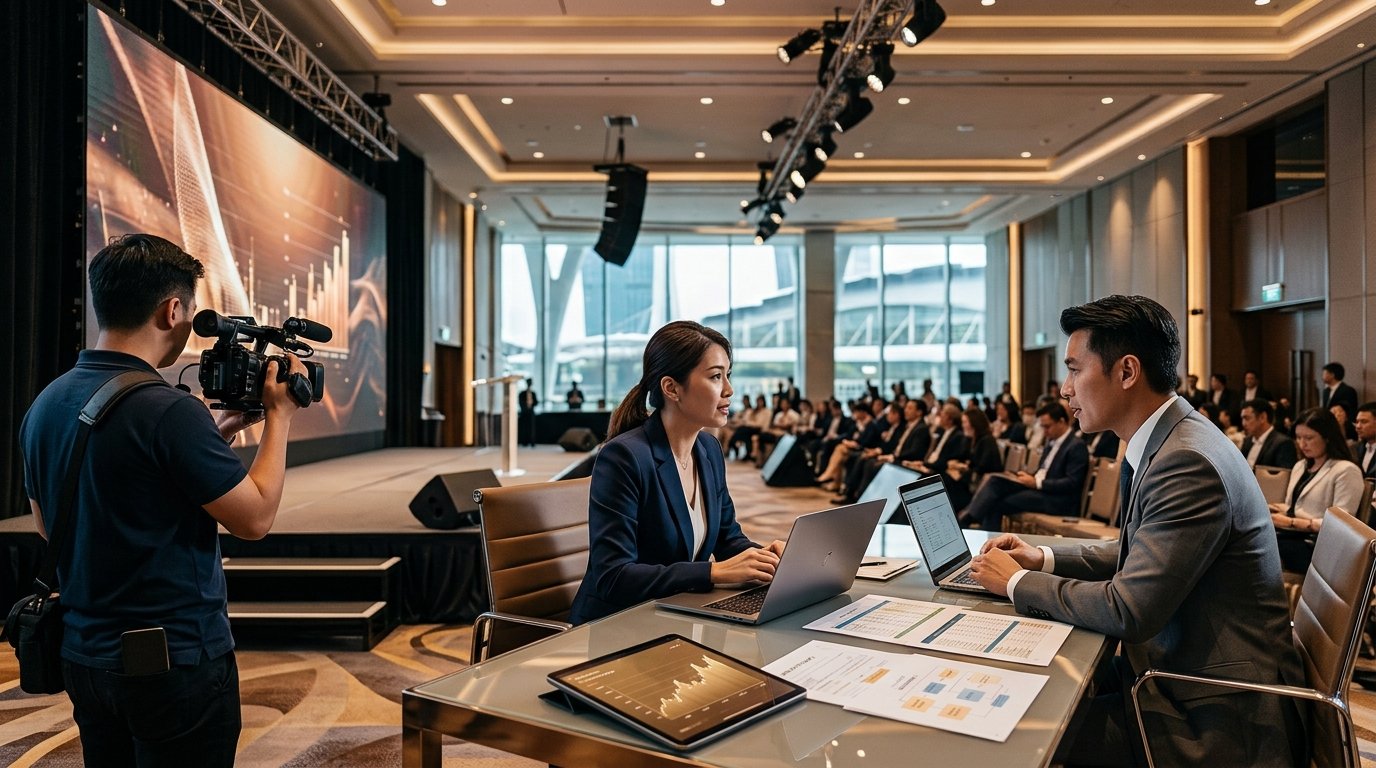
2026 Singapore Corporate Event Budget & Planning Guide
An expert analysis of the 2026 Singapore corporate event market, focusing on budget allocation, AV production costs, and logistical optimization.
How much should you budget for a corporate event in Singapore in 2026?
Planning a flagship summit in Singapore for 2026 requires a departure from 2024 pricing models. The city-state remains the undisputed hub for APAC corporate gatherings, but the fiscal reality has shifted significantly due to a combination of structural inflation and a tightening supply of Tier 1 venue space. We are seeing a baseline increase of 15% to 20% in core service costs, driven by rising labor rates and the continued premium on iconic venues like Marina Bay Sands, the Raffles City Convention Centre, and the Fairmont. For a high-stakes B2B conference, directors should anticipate a per-attendee cost ranging from $1,500 to $2,800. This range accounts for the full spectrum of high-end hospitality, technical production, and the 'Singapore Premium'—the unavoidable cost of operating in one of the world's most expensive but efficient business environments. This isn't just about inflation; it is about the heightened expectations of a global audience that demands seamless execution, high-speed connectivity, and sustainable practices. To understand the visual standards expected at this level, reviewing a professional visual portfolio is essential for benchmarking your own production goals against the current market leaders.
Budgeting in Singapore is notoriously unforgiving for those who fail to account for the logistical complexity of the Central Business District (CBD). Early procurement is the only effective hedge against the volatility of the 2026 market. Based on current booking trajectories and historical occupancy data for the Downtown Core, we advise our clients to lock in venue contracts at least 14 to 18 months in advance. Production partners should be engaged no later than 9 months out to secure the best technical talent. While some planners rely on outdated benchmarks, the reality is that Q1 and Q3 slots—the peak seasons for financial and tech summits—are often fully committed years in advance. Latecomers will face a 'scarcity premium' of 30% or more on remaining inventory, often forced into sub-optimal dates or secondary venues that require higher transport subsidies. Your budget must be a living document, but the contingency fund should be no less than 15% of the total spend. This buffer is necessary to account for the tightening of the local labor market, specialized technical requirements, and the rising costs of compliance with the Singapore Green Plan 2030, which mandates stricter waste management and energy efficiency for large-scale events.
Furthermore, the 9% GST environment and potential adjustments to the COMPASS (Complementarity Assessment Framework) for foreign labor mean that service providers are passing on higher operational costs to the end client. A strategic budget for 2026 must also consider the 'soft costs' of event planning, such as speaker honorariums and international travel for key stakeholders, which have seen a decoupled inflation rate compared to local services. When building your 2026 forecast, categorize your spend into 'Fixed Infrastructure' (Venue, AV, Basic F&B) and 'Variable Experience' (Content creation, networking activations, and premium catering). By protecting the 'Fixed Infrastructure' early, you allow for more flexibility in the 'Variable Experience' as the event date approaches and the specific needs of your audience become clearer. Alesia RSVP recommends a 'bottom-up' budgeting approach where every line item is justified by its contribution to the final attendee experience, rather than simply inflating last year's figures.
What are the essential AV and vendor coordination costs for B2B events?
In 2026, AV is no longer a secondary line item; it is the primary vehicle for your brand’s message and the foundation of your event's ROI. A common mistake among event planners is allocating 60% of the budget to F&B and venue while leaving only 15% for production. In the modern corporate landscape, this is a recipe for a forgettable event that fails to translate to digital audiences. For a premium corporate event in Singapore, the production budget—covering live streaming, multi-camera setups, LED wall integration, and editorial photography—should represent at least 30% to 35% of the total investment. High-end video production and same-day highlight reels are the only assets that extend the life of a three-day summit into a year-long marketing campaign. If you are spending $500,000 on a venue, hiring a budget photographer for $1,000 is a strategic failure that devalues your entire brand presence and wastes the opportunity to capture high-authority content.
Vendor coordination in Singapore requires a partner who understands the local regulatory environment, including MOM (Ministry of Manpower) requirements for technical crews and WSH (Workplace Safety and Health) protocols. The cost of professional live streaming for a global broadcast has stabilized in terms of hardware, but the requirement for redundancy—dual-bonded internet lines, backup power generators, and dedicated satellite links—adds a necessary layer of expense that cannot be ignored. We see a growing trend in 'content-first' budgeting, where the physical event serves as a high-tech studio for podcasting and executive interviews. This approach justifies the spend by providing a library of content for social media, PR, and internal communications. Alesia RSVP has pioneered this model, integrating on-site podcast studios and rapid-turnaround video teams into the core planning phase. This ensures that every dollar spent on production delivers a measurable return in digital reach and brand authority, long after the physical stage has been dismantled.
Technical labor in Singapore is another critical cost driver. The demand for skilled Technical Directors (TDs) and Vision Mixers who can handle complex hybrid environments has outpaced supply. For a 2026 event, expect to pay a premium for 'show-critical' personnel. This is not the area to cut costs; a failed stream or a malfunctioning LED wall during a keynote can cause irreparable damage to a brand's reputation. Beyond the hardware, consider the 'Digital Layer' of your event—custom event apps, interactive polling, and AI-driven networking tools. These services require seamless integration with the on-site AV team. By consolidating your production and digital vendors under a single lead agency, you reduce the 'coordination tax'—the time and money lost to miscommunication between disparate teams. This holistic approach to production ensures that the technical execution is as polished as the keynote content itself, providing a frictionless experience for both on-site and remote attendees.
How can event directors optimize logistics to mitigate rising venue rates in Singapore?
Mitigating the high cost of Singaporean real estate requires a tactical approach to scheduling, space utilization, and local sourcing. The traditional three-day conference model is being challenged by high-impact, two-day intensives that utilize multi-use spaces. Instead of booking separate rooms for breakouts, smart directors are using modular production techniques to pivot main stages into interactive zones within minutes. This reduces the square-footage requirement—and thus the venue rental fee—while maintaining the energy and momentum of the event. Furthermore, leveraging local production expertise is the most effective way to avoid the massive shipping and carnet costs associated with flying in gear from Europe or North America. Singapore’s local AV infrastructure is world-class, but it requires a lead agency that can vet the quality of local providers to ensure they meet international corporate standards for reliability and aesthetic finish.
Logistics optimization also extends to the attendee experience and 'last-mile' efficiency. In a city where transport is efficient but expensive for large groups during peak hours, selecting a venue with integrated accommodation or one located within the 'walking radius' of major hotels is a major cost-saver. However, the real savings are found in the 'Bridge'—the transition between the live event and the post-event digital tail. By investing heavily in professional capture during the event, you reduce the need for expensive follow-up marketing shoots or studio sessions later in the year. Alesia RSVP acts as the strategic glue in this process, managing the complex intersection of venue logistics and high-end content creation. We ensure that the logistical plan serves the production plan, not the other way around. This means scheduling load-ins to avoid peak ERP (Electronic Road Pricing) charges and coordinating with venue catering to minimize food waste, which is increasingly factored into venue service fees.
Another often-overlooked area for optimization is the 'Dark Day' or setup day. Venue rentals in Singapore are charged by the hour or day, and a 48-hour setup for a 24-hour event is a poor use of capital. By using pre-visualized 3D renders and off-site pre-programming for lighting and video, we can compress on-site setup times, potentially saving tens of thousands of dollars in venue hire. Additionally, event directors should explore the Business Events in Singapore (BEiS) grant offered by the Singapore Tourism Board (STB). While the criteria are stringent, successful applicants can receive significant support for events that bring high-value business to the city. Navigating these grants requires a local partner who understands the application nuances and can align the event's objectives with Singapore's broader economic goals. By combining these tactical optimizations with a content-first strategy, event directors can ensure that even in a high-cost environment like Singapore, the ROI of the event remains undisputed by the C-suite.
FAQ
What are the projected inflation rates for event services in Singapore for 2026?
For 2026, corporate event services in Singapore are projected to see a specialized inflation rate of 4% to 6%, which is higher than the general CPI. This specifically impacts venue hire, specialized technical labor, and premium F&B. This is compounded by a 1-2% increase in hospitality service fees as the market adjusts to new labor regulations and the 9% GST. Early booking, multi-year contracts, and local sourcing are the most effective strategies to lock in current rates and avoid the 'scarcity premium' associated with peak Q1 and Q3 event windows.
How does professional video production impact the overall ROI of a corporate event?
Professional video production transforms a one-time, ephemeral expense into a long-term marketing asset. High-quality aftermovies, keynote recordings, and executive interviews provide a library of content for social media, PR, and internal communications for up to 12 months post-event. Data from B2B marketing benchmarks shows that events with professional video coverage see a 40% higher engagement rate in post-event lead nurturing campaigns. By treating the event as a content studio, the 'cost per lead' is significantly reduced when amortized over the entire year.
What are the key logistical challenges for international agencies hosting events in Singapore?
The primary challenges include navigating strict local labor laws (MOM), managing Workplace Safety and Health (WSH) compliance, and securing Tier 1 venue dates during peak summit seasons. Additionally, the high cost of 'last-mile' logistics in the CBD and the complexity of managing multiple vendors in a high-demand environment can lead to budget overruns. Partnering with a local agency that has established vendor relationships, a deep understanding of Singaporean regulatory requirements, and expertise in 'content-first' production is essential to avoid costly delays and ensure international standards are met.
Frequently Asked Questions
What are the projected inflation rates for event services in Singapore for 2026?
For 2026, corporate event services in Singapore are projected to see a specialized inflation rate of 4% to 6%, which is higher than the general CPI. This specifically impacts venue hire, specialized technical labor, and premium F&B. This is compounded by a 1-2% increase in hospitality service fees as the market adjusts to new labor regulations and the 9% GST. Early booking, multi-year contracts, and local sourcing are the most effective strategies to lock in current rates and avoid the 'scarcity premium' associated with peak Q1 and Q3 event windows.
How does professional video production impact the overall ROI of a corporate event?
Professional video production transforms a one-time, ephemeral expense into a long-term marketing asset. High-quality aftermovies, keynote recordings, and executive interviews provide a library of content for social media, PR, and internal communications for up to 12 months post-event. Data from B2B marketing benchmarks shows that events with professional video coverage see a 40% higher engagement rate in post-event lead nurturing campaigns. By treating the event as a content studio, the 'cost per lead' is significantly reduced when amortized over the entire year.
What are the key logistical challenges for international agencies hosting events in Singapore?
The primary challenges include navigating strict local labor laws (MOM), managing Workplace Safety and Health (WSH) compliance, and securing Tier 1 venue dates during peak summit seasons. Additionally, the high cost of 'last-mile' logistics in the CBD and the complexity of managing multiple vendors in a high-demand environment can lead to budget overruns. Partnering with a local agency that has established vendor relationships, a deep understanding of Singaporean regulatory requirements, and expertise in 'content-first' production is essential to avoid costly delays and ensure international standards are met.