
MICE Strategy India: B2B Event Production Trends 2025
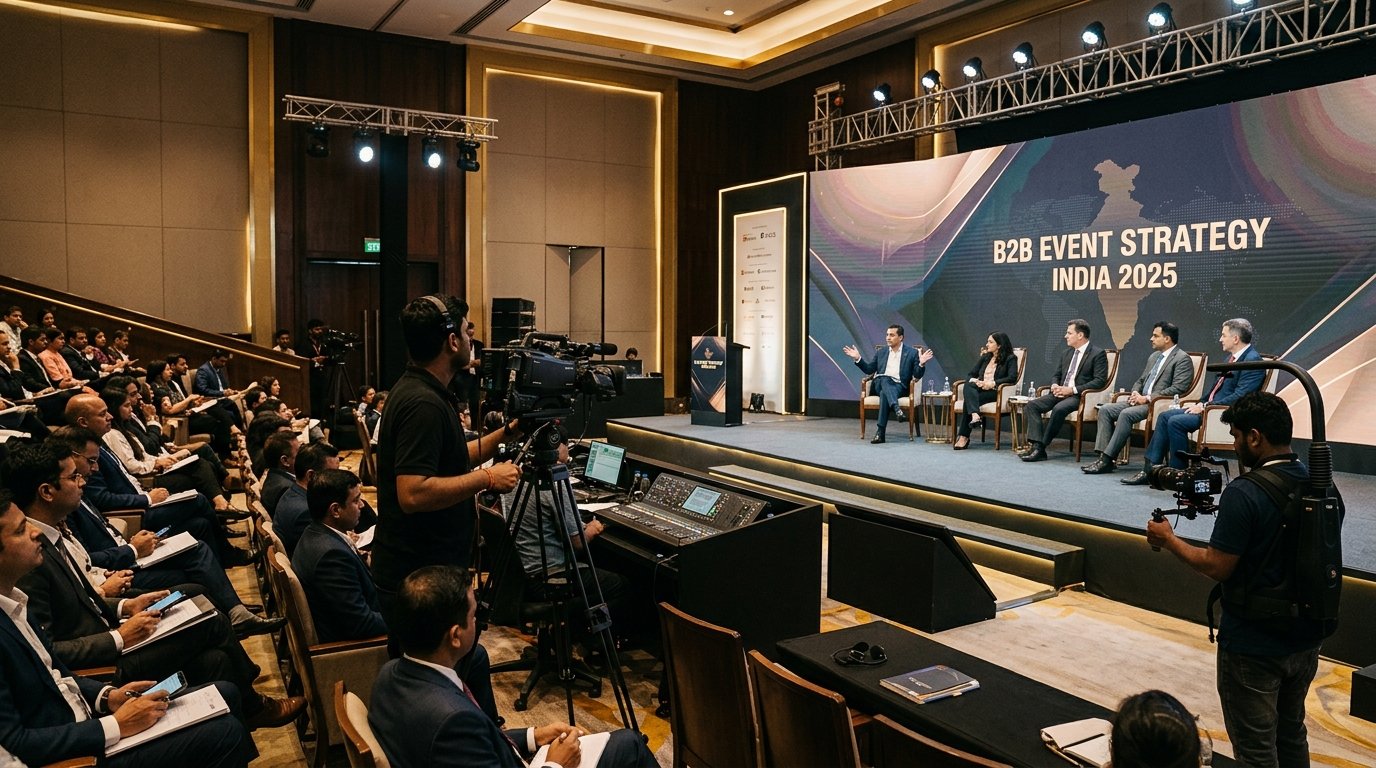
MICE Strategy India: B2B Event Production Trends 2025
With the rise of world-class infrastructure like Yashobhoomi and Bharat Mandapam, India is radically transforming its MICE (Meetings, Incentives, Conventions, Exhibitions) landscape. For international corporations, this shift represents a major strategic opportunity to capture an exploding market. Success in 2025 requires a sophisticated blend of local production nuances and global excellence standards.
Why India is Emerging as a Global MICE Powerhouse
The global event industry is witnessing a tectonic shift toward the East. With a MICE market projected to exceed $100 billion by 2030, India is no longer just a participant; it is positioning itself to lead. This ambition is fueled by an aggressive state strategy known as 'Meet in India,' exemplified by the unprecedented logistical success of last year's G20 Summit. The Indian government recognizes B2B events as direct economic catalysts, already generating $49.4 billion in annual revenue. The emergence of new hubs like Varanasi, Khajuraho, and Kochi demonstrates a clear intent to decentralize the offering beyond the traditional New Delhi and Mumbai corridors.
This expansion is backed by massive investments in convention centers that now rival the standards of Singapore, Dubai, or major European capitals. The 'Champion Sectors in Services' program identifies MICE as one of 12 priority sectors, streamlining foreign investment and airport modernization. For CMOs and global event planners, India offers a gateway to a tech-savvy, expanding middle-class audience. However, this rapid growth necessitates a strategic focus on execution quality. Hosting a summit in New Delhi requires a deep understanding of local nuances while maintaining international production benchmarks.
Brands that establish an early presence in these new facilities will gain a significant competitive edge, provided they master their brand image in this emerging market. The question is no longer whether India is ready, but whether international brands are prepared to adapt their Corporate Events Dubai standards to the scale and complexity of the subcontinent. The challenge lies in shifting the perception of India from an 'exotic' destination to an 'efficient' one, capable of supporting high-stakes tech launches or financial summits without a single technical glitch.
Navigating the Challenges of Large-Scale Corporate Events
Government enthusiasm must be balanced against operational realities on the ground. As noted in recent discussions on the Indian event industry, building a world-class convention center is only the first step in creating a functional MICE ecosystem. The primary challenge remains 'last-mile' logistics: delegate transport in dense urban areas, redundant high-speed digital connectivity, and the availability of technical vendors who meet premium production requirements. For an Event VP based in London or New York, managing the local supply chain can become a bottleneck without trusted partners.
Another friction point is the alignment of expectations. Service standards at new venues like Yashobhoomi are exceptional on paper, but Indian event culture often favors flexibility and 'jugaad' (improvisation) over the rigid procedural frameworks typical of Western planning. Successful B2B production must integrate this agility without sacrificing technical rigor. Managing the flow of thousands of attendees in massive structures requires expertise in crowd management and digital wayfinding that few local agencies have fully mastered. Furthermore, the temporary importation of specialized AV equipment via ATA Carnet remains a delicate administrative process requiring months of lead time.
Finally, sustainability and data privacy (GDPR compliance for international delegates) are becoming central requirements. Fortune 500 companies now demand precise ESG reporting for their events. In India, this means managing waste at a massive scale and ensuring a positive local impact. The goal for 2025 will be to bridge the gap between monumental infrastructure and the specific needs of tech and finance firms that require surgical precision in their event deployment.
Elevating Brand Image in Emerging Markets
In a market as vast, competitive, and visual as India, event documentation is as critical as the event itself. For a multinational, hosting a summit in Mumbai or Bangalore is a strategic communication act aimed at both local stakeholders and global investors. Content production—editorial photography, cinematic aftermovies, multi-cam captures, and live streaming—is the primary tool for proving ROI and the impact of geographic expansion. Global event trends on BizBash confirm that post-event content is now the number one driver of long-term B2B engagement.
The risk in emerging zones is settling for standard coverage that fails to reflect the scale of the venue or the caliber of the speakers. A premium aesthetic is non-negotiable to maintain global brand consistency. This requires deploying production teams that speak the language of luxury, tech, and high finance. Whether for an opening keynote or a high-level panel, the quality of lighting, framing, and post-production must mirror the organization's prestige. In India’s rich and saturated visual culture, a 'flat' brand image disappears instantly; instead, brands must lean into powerful visual storytelling.
The objective is to transform every event into a durable digital asset. This includes using drones to capture the sheer scale of new convention centers, alongside intimate, authentic portraits of thought leaders. Reviewing an international-standard Photo & Video Gallery highlights the visual gap between simple event coverage and true brand storytelling. In 2025, video will not just be a memento but the cornerstone of the PR strategy for any brand entering the Indian market.
Top Convention Centers for B2B Events in 2025
Venue selection in India is now driven by 'mega-complexes' that redefine scale. Yashobhoomi (India International Convention and Expo Centre) in New Delhi is the flagship of this new era. Located near the international airport, it offers one of the world’s largest meeting spaces with integrated cutting-edge technology, capable of hosting over 11,000 delegates in its main hall. Alongside it, Bharat Mandapam—the G20 host venue—remains the top choice for events requiring high-level protocol, security, and a sense of national prestige.
In Mumbai, the Jio World Convention Centre has been a game-changer for the luxury and tech sectors. Situated in the Bandra Kurla Complex (BKC) business district, it offers a level of sophistication and finish rarely matched globally, ideal for high-end product launches or international press conferences. For tech-centric industries, Bangalore offers the BIEC (Bengaluru International Exhibition Centre), while Hyderabad stands out with HITEX, particularly suited for the pharmaceutical and IT industries due to its dynamic local ecosystem.
This is where Alesia RSVP acts as a strategic partner for demanding brands. We understand that infrastructure is merely the backdrop. Our role is to bring European production rigor to the heart of India’s new hubs. As an agency specializing in event management and premium audiovisual production, we ensure the transition between India’s monumental ambitions and the quality standards expected by global headquarters.
FAQ
What is the 'Meet in India' initiative?
It is a government-led campaign designed to promote India as a premier global MICE destination by upgrading infrastructure and simplifying regulations for international B2B events.
How do I manage AV equipment imports for an event in India?
The most efficient method is using an ATA Carnet, which allows for the temporary, duty-free import of professional equipment. It requires planning at least 3-6 months in advance.
Which city is best for a tech conference in India?
Bangalore (BIEC) and Hyderabad (HITEX) are the primary tech hubs, though Mumbai's Jio World Centre is increasingly preferred for high-end tech launches.
Frequently Asked Questions
What is the 'Meet in India' initiative?
It is a government-led campaign designed to promote India as a premier global MICE destination by upgrading infrastructure and simplifying regulations for international B2B events.
How do I manage AV equipment imports for an event in India?
The most efficient method is using an ATA Carnet, which allows for the temporary, duty-free import of professional equipment. It requires planning at least 3-6 months in advance.
Which city is best for a tech conference in India?
Bangalore (BIEC) and Hyderabad (HITEX) are the primary tech hubs, though Mumbai's Jio World Centre is increasingly preferred for high-end tech launches.