
Wellness Hospitality Trends for B2B Corporate Events
Wellness Hospitality Trends for B2B Corporate Events
High-performance delegates no longer tolerate burnout. Learn how wellness hospitality is becoming the new baseline for B2B event ROI, moving beyond luxury retreats into the core of corporate strategy.
How is wellness hospitality redefining the B2B event experience?
Wellness is no longer a luxury retreat reserved for the ultra-wealthy or niche weekend getaways; it is the new baseline for high-performing corporate events. For years, the B2B conference circuit was defined by fluorescent lights, stale pastries, and back-to-back sessions that left attendees physically and mentally depleted. That model is failing because it ignores the biological reality of the modern professional. Today’s decision-makers—the marketing directors and C-suite executives—are increasingly prioritizing cognitive performance and physical longevity. They recognize that an exhausted attendee is an unengaged one. This shift is fundamentally altering the B2B event experience, moving it away from pure endurance and toward a model of sustainable engagement. According to recent data, U.S. travelers spent $258 billion on wellness-focused travel in the past year, proving that health-conscious decisions have entered the mainstream. For event planners, this means wellness can no longer be an optional 'add-on' like a 6 AM yoga session that nobody attends. It must be embedded into the fabric of the event, from the choice of venue to the catering and the rhythm of the schedule.
We are seeing a transition where 'longevity' is the primary focus. This isn't about pampering; it's about providing the infrastructure—light, movement, nutrition, and sleep—that allows professional delegates to perform at their peak. When we talk about longevity in a B2B context, we are talking about the preservation of human capital. A three-day summit in a windowless basement produces diminishing returns by the afternoon of the second day. In contrast, an event designed with biophilic principles, air purification, and scheduled 'white space' for mental recovery keeps the intellectual momentum high. As these expectations rise, the way we document and share these experiences must evolve too. A professional gallery of a modern summit should reflect this energy, showcasing vibrant, focused professionals in environments that support their well-being rather than draining it. The industry is moving toward a future where the success of a summit is measured not just by lead generation, but by the physical and mental state of the participants at the end of day three. This holistic approach ensures that the connections made are meaningful and that the information shared is actually retained, rather than lost to the fog of travel-induced fatigue. Organizers are now looking at the 'biological cost' of their events, seeking to minimize the cortisol spikes associated with tight transitions and poor nutrition, replacing them with environments that foster dopamine and oxytocin through comfortable, well-lit networking hubs.
Why are mid-market hotel brands leading the shift in corporate longevity?
The democratization of wellness is being driven by mid-market hospitality leaders rather than just high-end boutique brands. Novotel’s 'Longevity Everyday' model is a prime example of how health-conscious travel is breaking out of the luxury bubble. By embedding supportive choices into the ordinary rhythms of a stay across 630 hotels worldwide, they are making wellness accessible to the average business traveler. This is a critical development for corporate event organizers who frequently book large-scale conferences in major hubs like London or Paris. When a mid-market brand adopts a longevity framework, it signals that wellness is now a standard requirement for the global workforce. This shift is documented in recent LinkedIn discussions on wellness hospitality trends, where professionals highlight that hospitality is moving beyond specialized retreats into daily life.
For a VP of Events, choosing a venue that understands this 'everyday longevity' is a strategic move. It ensures that the venue partner is aligned with the health goals of the attendees, reducing the friction often associated with corporate travel. This alignment directly impacts the bottom line: guests who sleep better and eat better are more likely to participate in sessions, engage with sponsors, and provide positive post-event feedback. The ROI of wellness is found in the increased capacity of the human capital present at the event. As highlighted by BizBash regarding event industry trends, the integration of these health-conscious models is becoming a deciding factor for site selection teams globally. The venue is no longer just a backdrop; it is a functional tool for attendee performance. Mid-market hotels are uniquely positioned to lead this because they handle the bulk of corporate volume. By standardizing high-quality sleep protocols, such as blackout curtains, soundproofing, and circadian lighting, they provide a reliable environment for the 'road warrior' who needs to be sharp for a 9 AM keynote. Furthermore, the shift toward 'functional food' in mid-market catering—moving away from heavy carb-loaded lunches to nutrient-dense, low-glycemic options—prevents the dreaded afternoon slump, keeping the exhibition floor buzzing with active conversations. This systemic change is not a trend; it is a response to a global workforce that is more health-literate than ever before.
How can event organizers visually communicate a commitment to guest wellbeing?
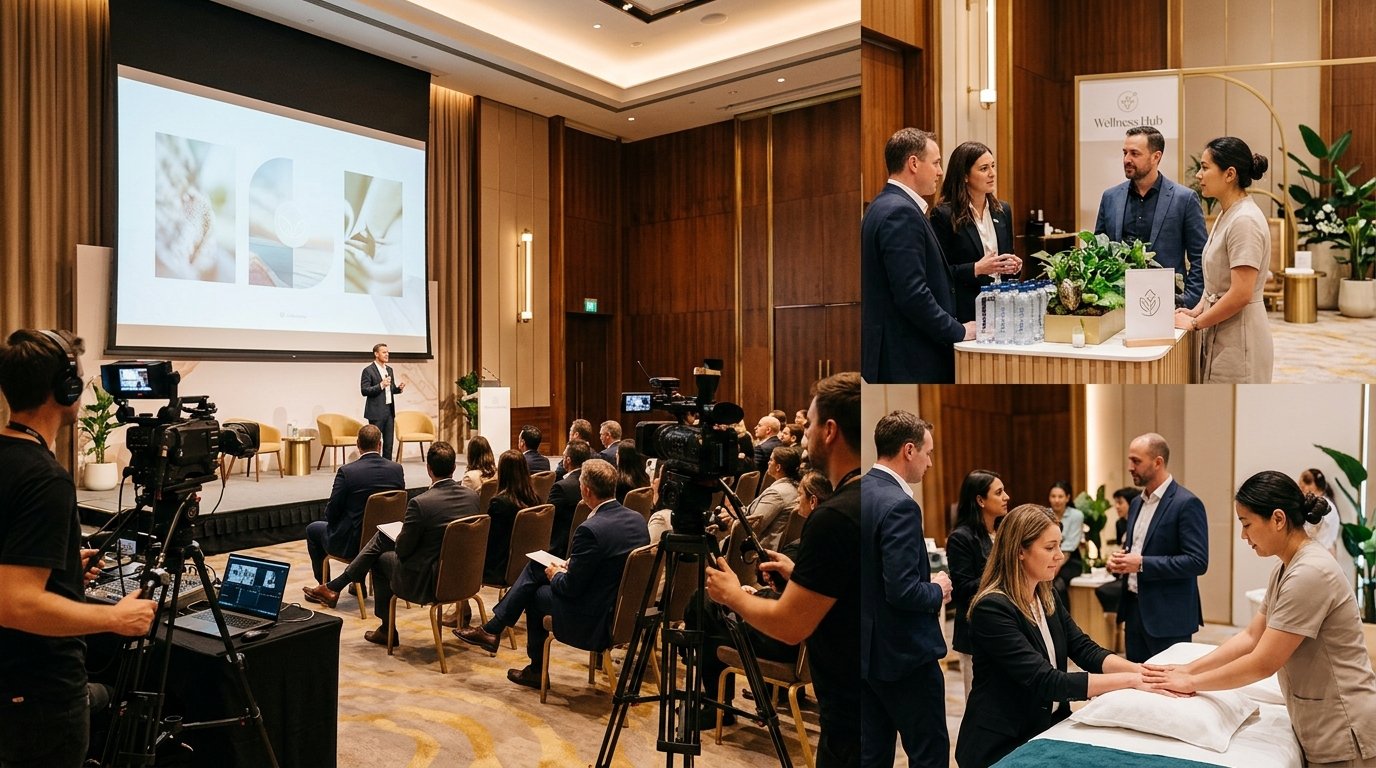
As wellness becomes a core part of the B2B rhythm, the visual strategy for documenting these events must change. Traditional event photography often focuses solely on the speaker at the podium or the crowded exhibition floor. While these are necessary, they fail to communicate the human-centric nature of modern summits. To truly showcase a commitment to guest wellbeing, event organizers need to capture the 'human energy' of the gathering. This means documenting the authentic moments that define professional gatherings beyond the boardroom: the networking walks, the high-quality catering, the naturally lit breakout spaces, and the genuine interactions that happen when people feel their best. At Alesia RSVP, we specialize in capturing this vibrant atmosphere. We understand that a recap video or a photo collection is a powerful tool for brand storytelling. If your event brand claims to value its people, your visual content must prove it.
High-quality editorial coverage highlights the healthy, energetic, and authentic moments that set a premium event apart from a generic conference. This visual proof is essential for attracting future speakers, sponsors, and attendees who are increasingly selective about where they spend their time. By documenting the wellness aspects of a summit—the hydration stations, the ergonomic lounges, the outdoor sessions—you are signaling to the market that your event is a high-performance environment. This isn't just about 'lifestyle' photography; it is about documenting the infrastructure of success. When the visual narrative focuses on the vitality of the participants, it reinforces the event’s position as a leader in the modern corporate world. Alesia RSVP provides the professional AV production and management necessary to ensure these moments are not only experienced but preserved as high-value marketing assets. We look for the subtle cues of a well-run event: the relaxed posture of a delegate in a well-designed lounge, the vibrant colors of fresh, seasonal catering, and the clarity of focus in a workshop bathed in natural light. These images tell a story of respect for the attendee's time and health. In an era where 'burnout' is a constant threat, showing a summit that replenishes rather than depletes is a massive competitive advantage. Your visual assets should serve as a testament to your brand's commitment to excellence, showing that you understand the link between a guest's physical state and their professional output. This level of detail in documentation transforms a standard event recap into a compelling narrative of corporate care and strategic foresight.
FAQ
How does wellness hospitality impact attendee engagement at B2B events?
Wellness hospitality directly improves cognitive function and reduces travel-related fatigue, leading to higher levels of participation and focus during sessions. When venues provide better sleep quality through soundproofing and circadian lighting, and offer nutritious dining options that avoid glycemic crashes, attendees maintain higher energy levels throughout the duration of a multi-day summit. This results in more active networking, better retention of session content, and a more positive overall sentiment regarding the event's value.
What are the benefits of choosing wellness-focused venues for corporate summits?
Selecting wellness-focused venues ensures that the physical environment supports the event's strategic goals by offering natural lighting, ergonomic spaces, and health-integrated services. This alignment reduces attendee burnout and increases the overall perceived value of the event. Furthermore, it simplifies the planning process, as the venue's existing infrastructure—such as advanced air filtration and fitness facilities—already meets the high standards of modern delegates, helping in securing long-term loyalty and sponsor satisfaction.
How can photography capture the wellness aspect of a professional event?
Photography captures wellness by focusing on the 'human energy' and the environmental quality of the event. This includes candid shots of engaged networking in bright, biophilic spaces, the aesthetic and nutritional quality of healthy catering, and attendees utilizing movement-friendly zones or outdoor breakout areas. These images move beyond the traditional podium shot to show a holistic, high-performance environment. By highlighting the vitality and focus of the participants, the photography serves as visual proof of a brand's commitment to modern corporate values and guest wellbeing.
Frequently Asked Questions
How does wellness hospitality impact attendee engagement at B2B events?
Wellness hospitality directly improves cognitive function and reduces travel-related fatigue, leading to higher levels of participation and focus during sessions. When venues provide better sleep quality through soundproofing and circadian lighting, and offer nutritious dining options that avoid glycemic crashes, attendees maintain higher energy levels throughout the duration of a multi-day summit. This results in more active networking, better retention of session content, and a more positive overall sentiment regarding the event's value.
What are the benefits of choosing wellness-focused venues for corporate summits?
Selecting wellness-focused venues ensures that the physical environment supports the event's strategic goals by offering natural lighting, ergonomic spaces, and health-integrated services. This alignment reduces attendee burnout and increases the overall perceived value of the event. Furthermore, it simplifies the planning process, as the venue's existing infrastructure—such as advanced air filtration and fitness facilities—already meets the high standards of modern delegates, helping in securing long-term loyalty and sponsor satisfaction.
How can photography capture the wellness aspect of a professional event?
Photography captures wellness by focusing on the 'human energy' and the environmental quality of the event. This includes candid shots of engaged networking in bright, biophilic spaces, the aesthetic and nutritional quality of healthy catering, and attendees utilizing movement-friendly zones or outdoor breakout areas. These images move beyond the traditional podium shot to show a holistic, high-performance environment. By highlighting the vitality and focus of the participants, the photography serves as visual proof of a brand's commitment to modern corporate values and guest wellbeing.