
Wellness Hospitality: The New B2B Event Standard
Wellness Hospitality: The New B2B Event Standard
As health-conscious travel enters the mainstream, corporate event planners must shift from luxury retreats to embedding wellness in every summit.
How is the 'Longevity Everyday' trend reshaping B2B event expectations?
For decades, the corporate conference was a test of physical and mental endurance. Attendees were expected to survive on back-to-back sessions, fluorescent lighting, and a diet of heavy pastries and lukewarm coffee. That era is ending. Wellness is no longer a luxury add-on reserved for executive retreats in the Alps; it is becoming the baseline expectation for high-performance corporate gatherings. This shift is driven by a fundamental change in how professionals view their time and health. According to Skift Research, U.S. travelers spent $258 billion on wellness-focused travel in the past year alone. This isn't just about spa treatments; it is about the 'Longevity Everyday' model—a philosophy that prioritizes small, consistent choices that support long-term health.
In the context of a B2B summit, this means the environment must support the attendee’s cognitive function rather than drain it. When hospitality giants like Novotel transition their entire operating model to support longevity, it signals a market-wide pivot. Event organizers who ignore this trend risk lower engagement scores and a visible decline in attendee energy by day two. Decision-makers are now looking for venues that offer more than just a ballroom; they want spaces that facilitate movement, provide nutritional transparency, and respect circadian rhythms. The 'Longevity Everyday' trend forces planners to rethink the entire event flow, from the timing of the first keynote to the lighting levels in the breakout rooms. It is a move away from the 'grind' culture of events toward a model where peak performance is the goal.
This evolution is particularly visible in major business hubs. For instance, when planning corporate events in Paris, we are seeing an increased demand for venues that integrate these wellness principles natively. It is no longer enough to have a gym in the basement; the wellness must be 'everyday'—integrated into the breakfast menu, the seating arrangements, and the scheduled breaks. This is not about pampering; it is about ensuring that the high-stakes networking and knowledge transfer that events are designed for actually happen. An exhausted attendee is a passive attendee. A longevity-focused attendee is an engaged participant who delivers better ROI for sponsors and organizers alike.
Why is wellness hospitality becoming essential for mid-market corporate travel and summits?
The democratization of wellness hospitality is perhaps the most significant shift in the industry today. Previously, high-level biohacking and longevity interventions were the exclusive domain of ultra-luxury retreats. However, as Novotel—Accor’s mid-market leader—embeds these practices across 630 hotels worldwide, the 'luxury bubble' has officially burst. For corporate event planners, this means that wellness-integrated stays are now accessible for large-scale conferences and mid-tier management summits, not just C-suite board meetings. This accessibility is essential because the modern workforce, particularly in the tech and finance sectors, views health as a non-negotiable component of professional life.
When wellness becomes a standard operating procedure in mid-market hospitality, it changes the logistics of event planning. Planners can now expect supportive choices to be the default rather than a custom request. This includes everything from 'active' meeting rooms that encourage standing to menu designs that avoid the post-lunch energy crash. As highlighted in recent BizBash Trends: Wellness Hospitality Breaking the Luxury Bubble, the integration of these features into mainstream hotels allows for a more consistent attendee experience across global event series. If a brand hosts a summit in London and a follow-up in Singapore, the ability to maintain a consistent wellness standard is a massive operational advantage.
Furthermore, the financial implications are clear. Companies are increasingly wary of the 'hidden costs' of corporate travel—namely, the burnout and decreased productivity that follow poorly managed event schedules. By choosing hospitality partners that prioritize longevity, organizations are protecting their most valuable asset: their people. This shift is also reflected in the types of venues being selected for our past events. We are seeing a move away from windowless basements toward airy, light-filled spaces that allow for natural movement. The mid-market shift ensures that these benefits are available to the 500-person conference just as easily as the 20-person workshop, making wellness a scalable strategy rather than a niche perk.
How can high-quality visual storytelling showcase a brand's focus on attendee well-being?
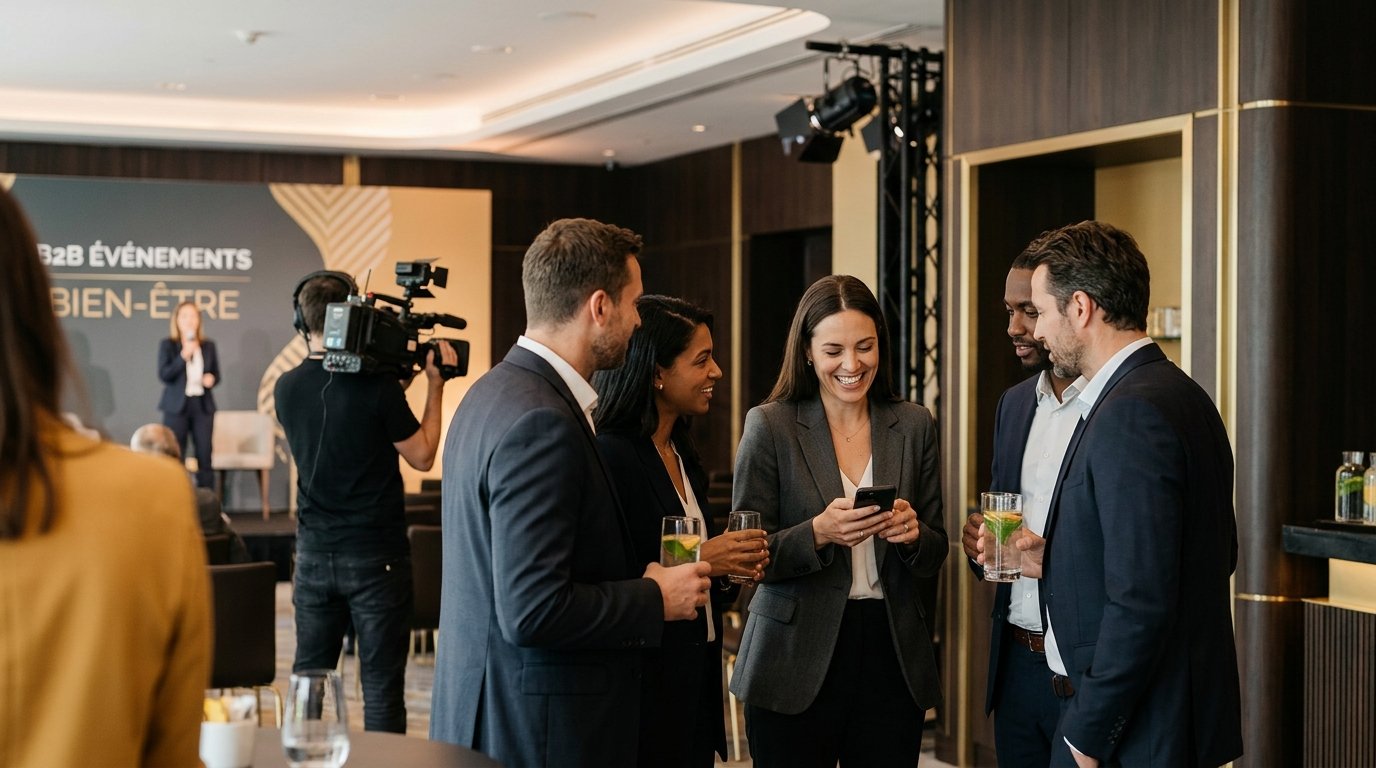
At Alesia RSVP, we document the human energy of B2B events. As wellness moves from niche retreats to mainstream venues, our lens captures the shift from exhausted attendees to vibrant, longevity-focused networking—providing brands with authentic visual proof of their commitment to guest well-being. The visual narrative of an event has historically focused on the stage and the speakers. While those remain important, the real story of a modern, successful summit is found in the energy of the crowd. High-quality photography and video are the only ways to prove to stakeholders and future attendees that an event was a high-energy, productive environment rather than a grueling slog.
When an event prioritizes wellness, the visual results are immediate and striking. You see it in the posture of the attendees during a networking session, the natural light hitting a breakout group, and the vibrant colors of a nutrient-dense catering spread. These are the details that build a brand's reputation as an 'attendee-first' organization. Traditional event photography often struggles to capture this because it focuses on static shots. However, an editorial approach—one that treats a corporate summit like a high-end lifestyle feature—can highlight the wellness elements that set an event apart. This visual evidence is a powerful marketing tool for the following year's recruitment and sponsorship sales.
Moreover, documenting these wellness initiatives provides social proof. When a company shares an aftermovie that features morning yoga sessions, healthy catering, and energized networking, it communicates a specific set of corporate values. It tells the world that the brand cares about the health and performance of its community. This is a far more compelling narrative than a standard highlight reel of talking heads. By capturing the 'vibe' of a wellness-integrated event, we help brands translate their investment in longevity into a tangible digital asset that resonates with a health-conscious professional audience.
What role does the environment play in capturing authentic networking moments?
The physical environment of an event is the silent architect of its success. In a wellness-focused setting, the environment is designed to facilitate authentic human connection. This is a departure from the traditional 'networking lounge' which often feels forced and sterile. When you introduce elements of longevity hospitality—such as acoustic comfort, varied seating postures, and biophilic design—the nature of the interaction changes. People relax. They engage more deeply. They stay longer. From a production standpoint, these environments are a goldmine for capturing genuine, unscripted moments that define a successful B2B event.
Lighting is perhaps the most critical environmental factor. The move away from harsh, artificial overheads toward natural light and warm, layered lighting not only improves attendee mood but also significantly enhances the quality of the visual coverage. In a well-lit, wellness-oriented space, the skin tones look better, the shadows are softer, and the overall aesthetic is more premium. This environment allows our photographers and videographers to work with the space rather than against it, resulting in content that feels organic rather than staged. As discussed in this LinkedIn Discussion on Wellness in the Event Industry, the atmosphere of an event is directly tied to the quality of the connections made there.
Ultimately, the goal of any corporate event is to foster relationships. A wellness-focused environment removes the physical barriers to those relationships. When attendees aren't battling a headache from bad air quality or a backache from poor seating, they are free to focus on the person in front of them. Capturing these moments of genuine connection is what we do at Alesia RSVP. By choosing a venue that understands 'Longevity Everyday,' planners are creating a stage where authentic networking can flourish. Our job is to ensure that those moments are preserved with the same level of care and quality that went into planning the event itself. The shift toward wellness isn't just a trend; it's a better way to do business, and it's a better story to tell.
FAQ
What does 'Longevity Everyday' mean for corporate event planners?
It refers to a shift where wellness is integrated into the daily operations of a hotel or venue rather than offered as a separate luxury service. For planners, this means selecting venues that provide healthy food options, ergonomic spaces, and environments that support sleep and cognitive function as a standard part of the booking.
How can wellness-focused hospitality improve attendee engagement at B2B conferences?
Wellness-focused hospitality reduces physical fatigue and mental burnout, which are common at multi-day conferences. By providing better nutrition, natural light, and opportunities for movement, venues help attendees maintain higher energy levels and better focus, leading to more active participation and effective networking.
Why should brands document the wellness aspects of their corporate events?
Documenting wellness initiatives provides visual proof of a brand's commitment to its attendees' well-being. High-quality photos and videos of energized, healthy participants serve as powerful marketing assets that differentiate the event from competitors and appeal to the growing demographic of health-conscious professionals.
Frequently Asked Questions
What does 'Longevity Everyday' mean for corporate event planners?
It refers to a shift where wellness is integrated into the daily operations of a hotel or venue rather than offered as a separate luxury service. For planners, this means selecting venues that provide healthy food options, ergonomic spaces, and environments that support sleep and cognitive function as a standard part of the booking.
How can wellness-focused hospitality improve attendee engagement at B2B conferences?
Wellness-focused hospitality reduces physical fatigue and mental burnout, which are common at multi-day conferences. By providing better nutrition, natural light, and opportunities for movement, venues help attendees maintain higher energy levels and better focus, leading to more active participation and effective networking.
Why should brands document the wellness aspects of their corporate events?
Documenting wellness initiatives provides visual proof of a brand's commitment to its attendees' well-being. High-quality photos and videos of energized, healthy participants serve as powerful marketing assets that differentiate the event from competitors and appeal to the growing demographic of health-conscious professionals.