
Wellness Hospitality: The New B2B Event Standard
Wellness Hospitality: The New B2B Event Standard
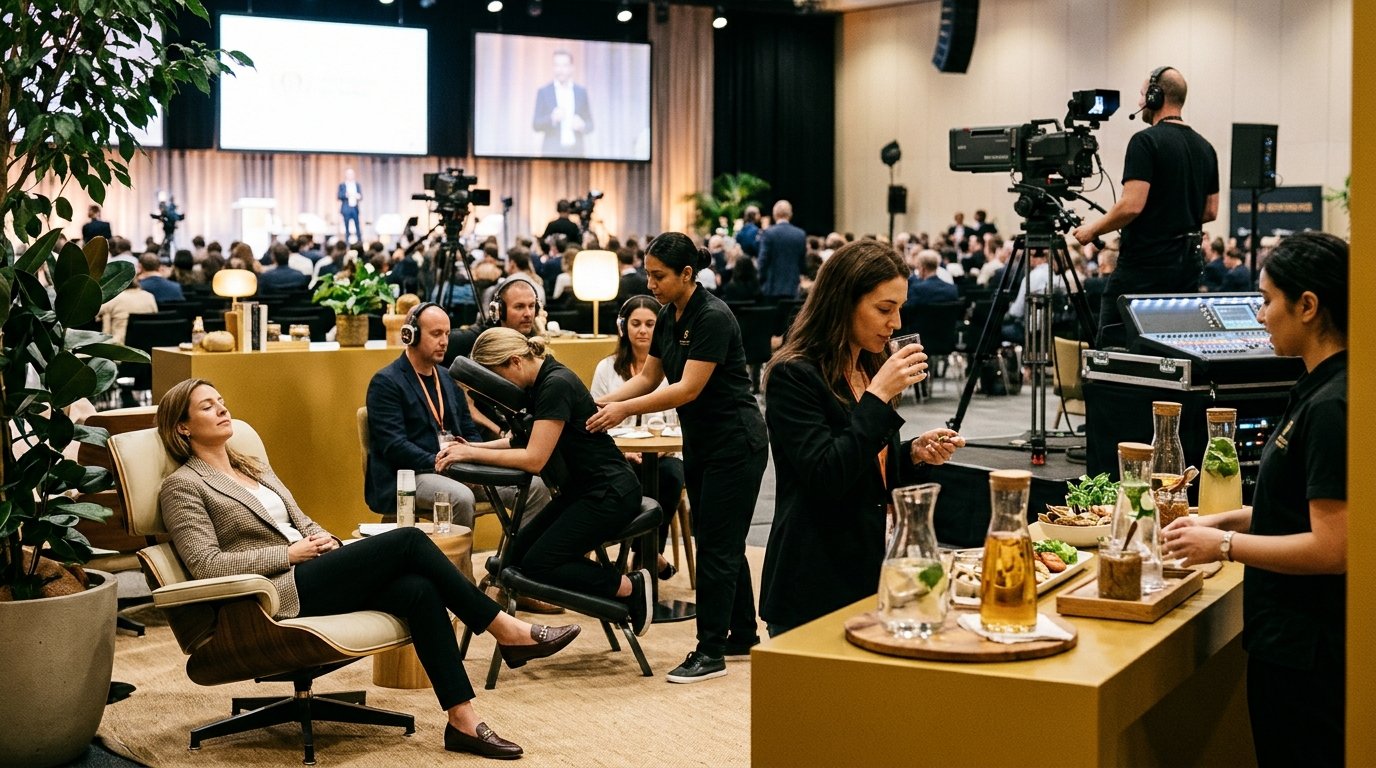
Wellness is no longer a luxury add-on; it's the new standard for the modern corporate traveler. As the industry pivots toward 'Longevity Everyday,' event organizers must align their visual narrative with these evolving attendee expectations.
How is wellness hospitality changing the corporate event landscape?
The era of the 'exhaustion-as-a-badge-of-honor' conference is officially over. For decades, the corporate event landscape was defined by endurance: long hours in windowless ballrooms, caffeine-fueled mornings, and late-night open bars that left attendees depleted by the final keynote. Today, we are witnessing a fundamental pivot in how corporate hospitality is structured. This shift is moving away from high-calorie banquets and toward what industry leaders like Novotel describe as 'Longevity Everyday.' This isn't merely a fleeting health trend; it is a calculated response to a documented $258 billion market spend by U.S. travelers on wellness-focused experiences. In the high-stakes world of B2B events, this translates to a growing demand for environments that support cognitive performance rather than depleting it.
When C-suite executives and decision-makers fly across the globe for a summit, they are no longer looking for a luxury bubble that isolates them from their healthy routines. Instead, they seek seamless integration. They want to maintain their circadian rhythms, their nutritional standards, and their mental clarity. This transition is evident in how global hospitality leaders are redesigning their operating models. No longer restricted to the premium retreats of the ultra-wealthy, health-conscious choices are being embedded into the ordinary rhythms of a stay. This democratization of wellness means that even a standard mid-week conference is now expected to provide the tools for recovery and peak performance.
For the event industry, this means that the choice of venue and catering is now a direct reflection of a brand's empathy toward its attendees. A brand that forces its guests into cramped, poorly ventilated spaces with sugary snacks is signaling a lack of modern awareness and a disregard for the attendee's time and health. Conversely, those who prioritize natural light, movement, and recovery are seeing higher engagement levels and more meaningful networking. This evolution is frequently discussed in LinkedIn discussions on Wellness Hospitality, where industry leaders note that the ROI of an event is increasingly tied to the physical and mental state of its participants at the end of day three. If your guests leave feeling energized rather than drained, the lasting impression of your brand is one of vitality and respect. This cultural shift requires a new approach to event production—one where the biological needs of the human being are placed at the center of the logistical plan. We are moving toward a 'performance-first' hospitality model where the success of a B2B gathering is measured by the clarity of the ideas exchanged, which is a direct byproduct of the physical wellbeing of the participants.
Why should event planners prioritize longevity-focused venues for B2B gatherings?
Selecting a venue is the most significant decision an event planner makes, and the criteria have shifted from mere 'square footage' to 'biological support.' Longevity-focused venues are those that provide infrastructure naturally encouraging better habits. This includes everything from advanced circadian lighting systems—which mimic natural daylight patterns to regulate sleep-wake cycles—to menus designed by clinical nutritionists to prevent the afternoon 'slump' that plagues traditional conferences. When you plan Corporate Events in Paris or other major global hubs, the venue's ability to offer these sophisticated amenities becomes a decisive competitive advantage.
High-stakes networking requires peak mental clarity. If your attendees are struggling with jet lag, poor air quality, and the physiological stress of a sedentary schedule, the quality of their interactions inevitably suffers. By prioritizing venues that offer 'Longevity Everyday' features—such as dedicated quiet zones for sensory recovery, high-quality hypoallergenic bedding, and movement-integrated meeting rooms featuring standing desks or ergonomic seating—you are essentially investing in the intellectual output of your conference. You are creating a 'high-performance container' where the environment works in favor of the agenda, not against it.
Furthermore, the trend toward wellness is a major topic in BizBash trends in Event Industry Wellness, where the focus is shifting from 'spa treatments' to 'operationalized health.' This means that wellness is not a 30-minute yoga session on the final morning; it is the baseline of the entire event experience. It is found in the air filtration systems, the acoustic dampening of the breakout rooms, and the hydration stations that offer more than just bottled water. Planners who fail to recognize this shift risk lower attendance numbers as executives become more selective about which events justify the physical toll of travel. At Alesia RSVP, we have seen this reflected in our past events, where the most successful summits are those that treat attendee energy as a finite, precious resource to be managed, not exploited. A longevity-focused venue acts as a silent partner in the event's success, ensuring that the human 'hardware' is functioning at its best so the 'software'—the content and networking—can be fully processed and retained.
How can high-quality photography showcase a brand's commitment to attendee wellbeing?
The visual narrative of an event is its primary legacy. If your event strategy focuses on wellness and longevity, but your photography only captures people standing around beige buffet tables or sitting in dark, uninspired auditoriums, there is a fundamental brand disconnect. As a premium photo and video agency, Alesia RSVP captures the evolution of B2B events by shifting the lens from traditional, static networking to the dynamic 'Longevity Everyday' era. Our editorial approach focuses on the photogenic assets of modern hospitality: the vibrant, natural colors of nutrient-dense catering, the soft natural light flooding a mindful breakout session, and the active, upright engagement of attendees in movement-based networking.
These images are far more powerful for a brand's post-event storytelling than generic handshake photos. High-quality visual content serves as the only tangible proof of a brand's values. When prospective sponsors, future attendees, or internal stakeholders look through your event gallery, they should see a high-performance environment that looks as good as it feels. This requires a production team that understands the nuance of 'wellness'—it’s not about taking pictures of people exercising; it’s about capturing the 'glow' of an energized audience. It’s about the composition that highlights the biophilic design of the venue or the candid shot of a CEO engaged in a deep conversation in a sun-drenched garden rather than a dark hallway.
In cities like London or Dubai, where the corporate competition is fierce, the ability to project an image of a health-conscious, forward-thinking organization is a powerful tool for recruitment, retention, and brand positioning. At Alesia RSVP, we integrate this understanding into our multi-photographer editorial coverage. We use high-end optics and a sophisticated color palette to ensure the visual story we tell is one of longevity, vitality, and premium quality. We don't just document the event; we document the culture of care that your brand has built. We look for the details: the infused water stations, the ergonomic lounge setups, and the genuine smiles of people who aren't exhausted. This is the bridge between professional AV production and the new era of corporate hospitality. By documenting these elements with an editorial eye, we help our clients transform a one-time event into a permanent brand asset that communicates modern leadership and a commitment to the human element of business.
FAQ
What is the 'Longevity Everyday' model in hospitality?
The Longevity Everyday model is an operating strategy pioneered by hospitality leaders like Novotel to move wellness from a luxury niche into mainstream stays. It focuses on embedding small, science-backed, health-supportive choices—such as circadian lighting, better sleep protocols, and nutrient-dense nutrition—into the daily routine of every guest. Instead of offering wellness as an expensive, time-consuming add-on, it becomes the default standard of the stay, supporting the guest's long-term health and daily performance.
How does wellness-focused event planning improve attendee engagement?
Wellness-focused planning directly impacts cognitive function by managing the physiological stressors of travel and conferencing. By providing environments with natural light, proper ventilation, and nutrition that stabilizes blood sugar, planners reduce the physical fatigue and 'brain fog' associated with long events. This leads to higher alertness during keynotes, better information retention, and more productive, high-quality networking sessions because attendees have the physical energy to remain fully present.
Why is visual content crucial for promoting wellness-centric corporate events?
Visual content serves as the tangible evidence of a brand's commitment to attendee well-being. In an era where 'wellness washing' is common, high-quality photography and video that showcase authentic healthy environments—such as vibrant catering, well-lit spaces, and energized participants—help differentiate an event from traditional, high-stress corporate gatherings. This visual proof makes the event more attractive to modern, health-conscious executives and sponsors who prioritize their time and physical health.
How can event planners measure the ROI of wellness initiatives?
ROI can be measured through qualitative attendee feedback regarding energy levels and satisfaction, as well as quantitative metrics like session stay-rates and post-event engagement. Furthermore, the high-quality visual assets generated from a wellness-focused event serve as long-term marketing collateral that enhances brand reputation and attracts premium sponsors who want to be associated with modern, health-conscious corporate values.
Frequently Asked Questions
What is the 'Longevity Everyday' model in hospitality?
The Longevity Everyday model is an operating strategy pioneered by hospitality leaders like Novotel to move wellness from a luxury niche into mainstream stays. It focuses on embedding small, science-backed, health-supportive choices—such as circadian lighting, better sleep protocols, and nutrient-dense nutrition—into the daily routine of every guest. Instead of offering wellness as an expensive, time-consuming add-on, it becomes the default standard of the stay, supporting the guest's long-term health and daily performance.
How does wellness-focused event planning improve attendee engagement?
Wellness-focused planning directly impacts cognitive function by managing the physiological stressors of travel and conferencing. By providing environments with natural light, proper ventilation, and nutrition that stabilizes blood sugar, planners reduce the physical fatigue and 'brain fog' associated with long events. This leads to higher alertness during keynotes, better information retention, and more productive, high-quality networking sessions because attendees have the physical energy to remain fully present.
Why is visual content crucial for promoting wellness-centric corporate events?
Visual content serves as the tangible evidence of a brand's commitment to attendee well-being. In an era where 'wellness washing' is common, high-quality photography and video that showcase authentic healthy environments—such as vibrant catering, well-lit spaces, and energized participants—help differentiate an event from traditional, high-stress corporate gatherings. This visual proof makes the event more attractive to modern, health-conscious executives and sponsors who prioritize their time and physical health.
How can event planners measure the ROI of wellness initiatives?
ROI can be measured through qualitative attendee feedback regarding energy levels and satisfaction, as well as quantitative metrics like session stay-rates and post-event engagement. Furthermore, the high-quality visual assets generated from a wellness-focused event serve as long-term marketing collateral that enhances brand reputation and attracts premium sponsors who want to be associated with modern, health-conscious corporate values.