
AI Storytelling: Elevating B2B Event Media Production
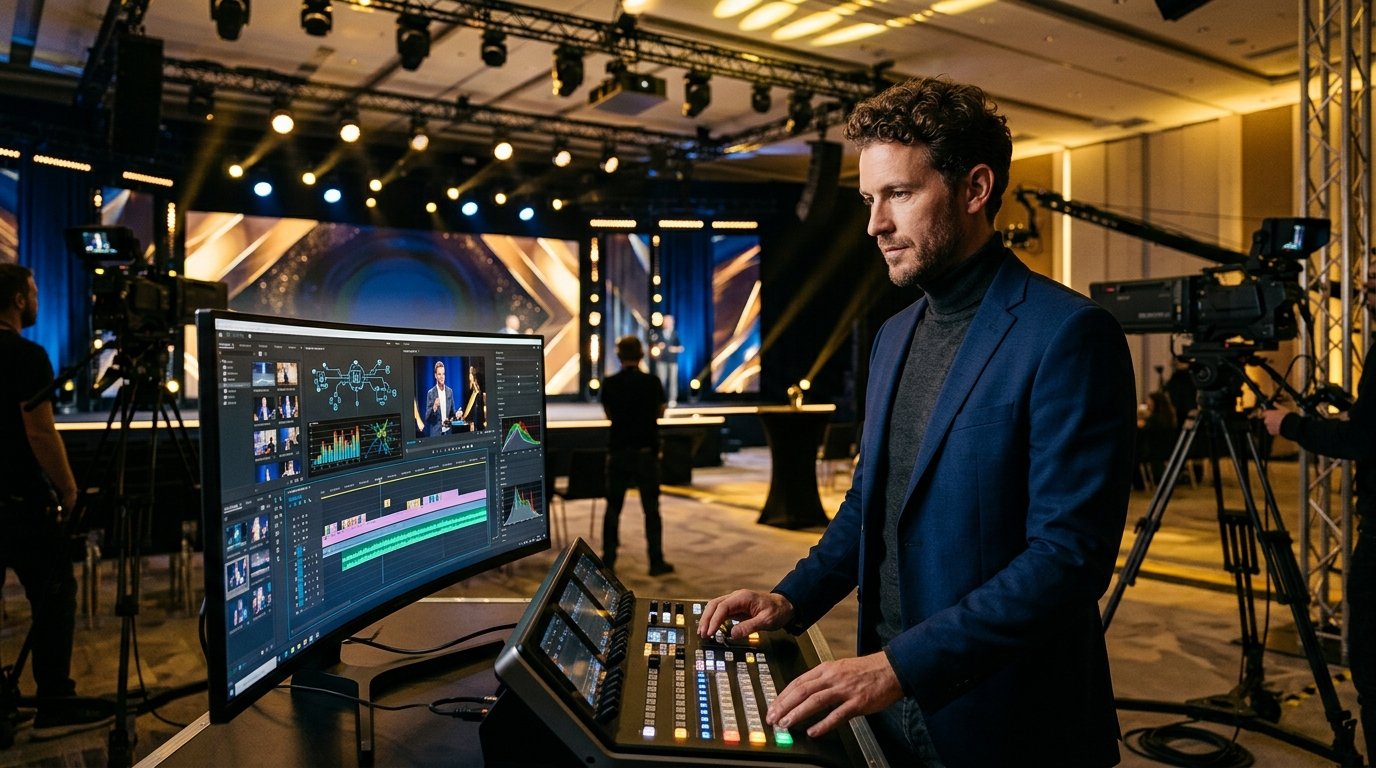
AI Storytelling: Elevating B2B Event Media Production
AI can dream up impossible worlds, but it takes a human eye to capture the soul of a brand. Learn to harness AI to elevate your event production.
How is AI redefining visual storytelling for high-end corporate events?
AI can dream up impossible worlds, but it takes a human eye to capture the soul of a brand. For years, B2B event production was tethered to the physical limitations of the chosen venue. If the lighting was suboptimal or the stage design lacked depth, the final media assets suffered. Today, visual AI acts as a creative accelerant, allowing production teams to push beyond those physical boundaries. This isn't about faking reality; it's about enhancing the narrative. When we produce a summit in Paris, we aren't just looking for snapshots. We are looking for a cohesive visual language that speaks to the brand's future. The shift is moving from 'what happened' to 'how the brand vision felt.'
Nik Kleverov of Native Foreign highlights that AI allows brands like Coca-Cola, Delta, and Toys“R”Us to visualize concepts that were previously too expensive or logistically impossible to film. The Toys“R”Us brand, specifically, has become a case study in using generative tools to recreate historical sentiment with modern fidelity, proving that AI can handle complex brand narratives with high emotional stakes. In the context of a corporate conference, this means creating immersive backgrounds, high-fidelity recap videos that blend live footage with synthetic enhancements, and personalized attendee content at scale. Industry trends on BizBash confirm that event planners are increasingly looking for ways to integrate these tools without losing the human touch.
The integration of AI into the production workflow allows for a level of scale that was previously unattainable. Instead of a single aftermovie, an event can now generate hundreds of personalized video snippets for sponsors and speakers within hours. This efficiency doesn't just save time; it increases the ROI of the event by keeping the conversation alive across social platforms while the energy is still high. We are seeing a transition where the camera is no longer just a recording device, but a data input for a larger creative engine. This engine can take a keynote and instantly generate stylized social cuts, translated versions for global offices, and high-impact visual summaries that feel more like cinema than a standard corporate recording.
Furthermore, the use of AI in pre-visualization is transforming the planning phase. Before a single light is rigged, production teams can use generative AI to show stakeholders exactly how the atmosphere will look under different conditions. This reduces the friction of the approval process and ensures that the creative vision is aligned from day one. By removing the 'technical hurdle' of traditional editing and rendering, the focus shifts entirely to the strategic application of the content. We are no longer limited by the number of editors in a room, but by the depth of the ideas we want to convey. The result is a more agile, more responsive form of event media that reacts to the live environment in real-time.
Why is human authorship still essential in AI-driven event production?
The rise of the 'Generalist with Big Ideas' is the most significant shift in the production talent pool. Technical skills—once the gatekeepers of the industry—are becoming commoditized. What remains valuable is the ability to direct, curate, and maintain brand integrity. AI can generate 1,000 images in minutes, but it cannot decide which one captures the specific tension of a high-stakes panel discussion or the relief of a successful closing keynote. Human authorship is the filter that prevents corporate media from feeling sterile and disconnected from the actual experience.
At Alesia RSVP, we bridge the gap between technology and human artistry. We view AI not as a replacement for our lenses, but as a tool to empower our team—allowing us to deliver high-end, iterative visual content that resonates with sophisticated audiences. Our Gallery demonstrates that while the tools change, the requirement for editorial judgment remains constant. Clients in the financial and tech sectors require transparency and legal safeguards. They need to know that the content produced is not only visually striking but also legally sound and ethically representative. This is where the human-in-the-loop model becomes a non-negotiable standard for premium events.
Bias in AI tools is a real risk; human oversight ensures that campaign inclusivity isn't sacrificed for speed. A machine might default to stereotypical representations of a 'CEO' or a 'tech developer' based on historical data. A senior creative director ensures that the visual output reflects the actual diversity and professional reality of the event. This human-in-the-loop approach is what separates premium corporate content from generic, AI-generated filler. We prioritize the brand's voice above the tool's capabilities. Without this oversight, AI-generated content risks falling into the 'uncanny valley,' where the visuals are technically perfect but emotionally hollow.
Moreover, the legal landscape surrounding AI-generated media is complex. Brands need partners who understand copyright nuances and the importance of using licensed datasets. A human producer acts as the guardian of the brand's legal safety, ensuring that every asset generated is compliant and ready for global distribution. We focus on 'Responsible AI'—using the technology to enhance human creativity rather than automate it into oblivion. This involves a rigorous curation process where only the most authentic and brand-aligned assets make the final cut. The goal is to use the machine to handle the volume, while the humans handle the soul, the ethics, and the final 'vibe check' that makes a brand feel human.
How can brands use AI to push the boundaries of traditional event media?
Traditional production is linear: plan, shoot, edit, deliver. AI-driven production is iterative. It allows for real-time adjustments and the creation of 'impossible' environments. Imagine a keynote speaker on a stage in Dubai, but the broadcast feed places them in a photorealistic digital twin of a future city that evolves as they speak. This level of production value was once reserved for Hollywood budgets and months of post-production. Now, it is accessible for B2B summits. The ability to prototype these visuals before the event even begins allows stakeholders to align on the creative vision with total clarity, removing the guesswork from high-stakes productions.
The key is knowing when to use AI and when to stick to traditional methods. For raw, authentic human connection—like a candid interview or a networking gala—traditional high-end photography is unbeatable. There is a specific texture to a real lens capturing a real smile that AI cannot yet replicate without feeling 'processed.' For visionary storytelling, high-impact openers, and futuristic brand films, AI is the superior choice. You can join the conversation on LinkedIn to see how other industry leaders are balancing these two worlds. The most successful brands are those that don't choose one over the other, but rather weave them together into a seamless experience.
Alesia RSVP positions itself as the premium solution for brands that want the best of both: the efficiency of modern tech and the reliability of a seasoned agency. By treating AI as a creative accelerant, we help brands tell stories that were previously unfilmable due to budget or time constraints. This approach transforms the event from a point-in-time gathering into a long-term content engine. Instead of the media dying the day the doors close, the event becomes the source material for a year's worth of marketing assets. AI allows us to slice, dice, and re-imagine the captured footage into evergreen content that continues to drive engagement long after the stage has been dismantled.
Ultimately, the goal is to create a visual legacy. In the B2B world, events are often the only time a brand's community comes together in the physical world. Capturing that energy requires a mix of documentary-style honesty and visionary art direction. By leveraging AI for the heavy lifting of production—color grading, noise reduction, and asset variation—we free up our creative minds to focus on the storytelling. This ensures that the final library of assets isn't just a collection of files, but a strategic toolset that the marketing team can use to drive the brand's narrative for the rest of the fiscal year. The future of event media isn't just about recording what happened; it's about building a world that people want to be a part of.
FAQ
Does AI replace the need for professional event photographers?
No, AI acts as an accelerant rather than a replacement. While AI can enhance, upscale, and edit images with incredible speed, it cannot replace the human judgment required to capture candid moments, emotional nuances, and high-stakes interactions. A professional photographer brings an editorial eye and the ability to navigate the social dynamics of an event, which are essential for authentic storytelling.
How can AI improve the turnaround time for event highlight reels?
AI speeds up the production process through iterative workflows, automated tagging of footage, and rapid color grading. By using AI to handle the time-consuming technical aspects of editing—such as syncing audio or finding specific speakers in hours of footage—production teams can deliver high-quality highlight reels and social cuts within hours of the event's conclusion, maximizing social media impact.
How does Alesia RSVP ensure authenticity when using AI tools?
We maintain authenticity by using a human-led curation process. Every AI-enhanced asset is reviewed by senior creative directors to ensure it aligns with the brand's voice, maintains ethical standards, and accurately represents the event's atmosphere. We use AI to expand the creative possibilities, but human oversight remains the final filter for quality and brand integrity.
What are the legal risks of using AI in event media?
The primary risks involve copyright and data privacy. Using AI tools that are trained on unlicensed data can lead to legal complications. Alesia RSVP mitigates these risks by using enterprise-grade AI tools with clear licensing terms and ensuring that all generated content is vetted for compliance. We prioritize transparency to ensure our clients' brands are protected.
Questions Fréquentes
Does AI replace the need for professional event photographers?
No, AI acts as an accelerant rather than a replacement. While AI can enhance, upscale, and edit images with incredible speed, it cannot replace the human judgment required to capture candid moments, emotional nuances, and high-stakes interactions. A professional photographer brings an editorial eye and the ability to navigate the social dynamics of an event, which are essential for authentic storytelling.
How can AI improve the turnaround time for event highlight reels?
AI speeds up the production process through iterative workflows, automated tagging of footage, and rapid color grading. By using AI to handle the time-consuming technical aspects of editing—such as syncing audio or finding specific speakers in hours of footage—production teams can deliver high-quality highlight reels and social cuts within hours of the event's conclusion, maximizing social media impact.
How does Alesia RSVP ensure authenticity when using AI tools?
We maintain authenticity by using a human-led curation process. Every AI-enhanced asset is reviewed by senior creative directors to ensure it aligns with the brand's voice, maintains ethical standards, and accurately represents the event's atmosphere. We use AI to expand the creative possibilities, but human oversight remains the final filter for quality and brand integrity.
What are the legal risks of using AI in event media?
The primary risks involve copyright and data privacy. Using AI tools that are trained on unlicensed data can lead to legal complications. Alesia RSVP mitigates these risks by using enterprise-grade AI tools with clear licensing terms and ensuring that all generated content is vetted for compliance. We prioritize transparency to ensure our clients' brands are protected.