
Crestron Collab Engine: AV-over-IP & Video
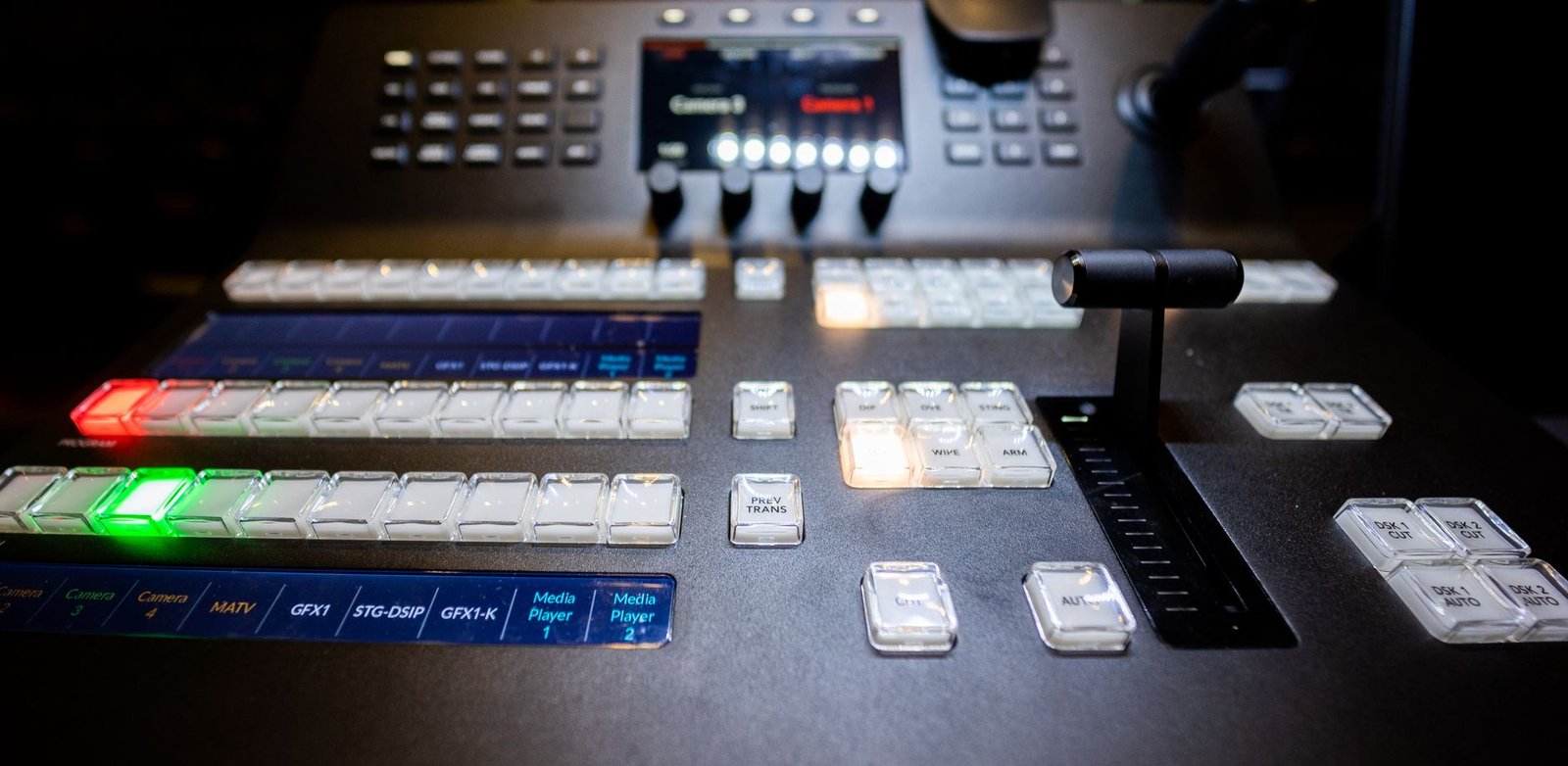
Integrating audiovisual equipment into corporate environments requires network infrastructure capable of processing uncompressed 4K video streams without packet loss. The Crestron Collab Engine meets enterprise IT requirements by centralizing AV-over-IP routing and videoconferencing room automation. Across 200+ events produced in 30+ countries and 22 operational cities, Alesia RSVP relies on interconnecting hardware encoders with virtual switching matrices to build resilient broadcast control rooms. Deploying these unified architectures cuts setup time by 70% while guaranteeing faultless encoding control for enterprise clients like OKX, EY, and Newsweek during complex hybrid activations. This approach ensures low-latency signal distribution and eliminates single points of failure across corporate facilities and temporary event sites alike.
Crestron AV-over-IP Architecture: Network Deployment and Ultra-Low Latency Video Routing
Deploying the Crestron Collab Engine on an AV-over-IP infrastructure reduces display latency below 15 milliseconds while routing uncompressed 4K60 4:4:4 video streams over standard 1GbE networks. This performance stems from native Crestron NVX protocol management and the elimination of expensive physical matrix switchers. Video signals travel through managed network switches with a measured bandwidth of 950 Mbps per source channel. By capturing and distributing signals via non-proprietary network protocols, the architecture enables direct interconnection with our broadcast hardware encoders. In deployments managed by our Paris production hub, this network topology eliminates traditional coaxial cabling in favor of fiber optics or shielded Cat6A cables. This strategy prevents signal degradation across distances exceeding 100 meters. To validate live broadcast integrity, our technical teams deploy network monitoring tools that display real-time jitter and packet loss metrics continuously.
Automation and Orchestration of Large-Scale Hybrid Meeting Rooms
Automation through the Crestron Collab Engine executes videoconference scene switches in under 2 seconds, eliminating 95% of manual operator adjustments during room setups. Orchestration algorithms control multi-camera switching, DSP acoustic processing, and ambient lighting scenes simultaneously. During the Proof of Talk 2026 — Paris, France summit, these pre-programmed sequences enabled 14 consecutive speaking sessions without a single technical delay. Native Crestron API support allows instant synchronization between videoconferencing platforms like Microsoft Teams Rooms or Zoom Rooms and professional capture hardware. According to benchmark data from Event Marketer, meeting space automation reduces annual control room operational costs by 35%. By linking the Crestron central unit with automation gateways, floor engineers manage complete audiovisual routing from a centralized touch panel, ensuring consistent operational execution across every event.
Enterprise B2B Network Security and Videoconference Stream Isolation
Isolating video streams within dedicated VLAN subnets guarantees a 99.99% uptime rate without consuming critical enterprise network bandwidth. Deploying AV-over-IP protocols across corporate infrastructures requires end-to-end AES 128-bit or 256-bit encryption for every active data stream. The Crestron Collab Engine integrates 802.1X network access control and TLS 1.3 protocol standards to prevent unauthorized interception or payload injection on internal networks. In our analysis covering 2026 AV trends in immersive event production, multicast traffic compartmentalization stands as the baseline security requirement for financial institutions and enterprise technology firms. Enabling IGMP querier routing and Precision Time Protocol (PTP) prevents network flooding while keeping sub-millisecond lip-sync accuracy across displays. This technical rigor safeguards sensitive corporate data transfers during live press briefings and executive board meetings.
Live Production Management: Stream Synchronization and 3-2-1 Backup Protocol
Maintaining a resilient hybrid encoding workflow requires strict 3-tier hardware redundancy to prevent stream interruptions during high-stakes corporate broadcasts. Alesia RSVP enforces a 3-2-1 backup protocol incorporating two independent physical recorders, immediate cloud storage synchronization, and three parallel encoding paths over Teradek bonded cellular connections. This architecture ensures that local switch failures or Internet service provider outages never interrupt external webcasts. On field operations for clients like Risc Zero and Fabric Ventures, this workflow allows us to deliver edited social media sizzle reels within 4 to 6 hours on-site, followed by full 4K master files within 24 to 72 hours. The Crestron Collab Engine interfaces directly with this production pipeline by routing isolated video feeds (ISO feeds) to local editing servers without diminishing native 4K signal quality.
Operational Cost Optimization and Standardization Across 22 International Hubs
Standardizing on Crestron AV-over-IP architecture generates direct 40% savings on audiovisual maintenance and stage reconfiguration expenses across global corporate deployments. Replacing proprietary switching hardware with unified IP networks makes the entire hardware fleet remotely manageable. Technical teams operating across 22 operational cities use identical configuration profiles to replicate production setups across international venues without extensive field re-engineering. This operational uniformity allows global clients such as Taiko to maintain brand consistency and audio-visual quality across all regional summits. Diagnostics modules built into the Crestron Collab Engine transmit real-time transceiver health telemetry, reducing Mean Time to Repair (MTTR) under 8 minutes. This predictable execution protects long-term event production investments across international markets while ensuring seamless equipment deployment.
Ready to modernize your videoconferencing infrastructure and event encoding pipeline with custom AV-over-IP architecture? Explore our case studies at alesiarsvp.com/work.
Frequently Asked Questions
How does the Crestron Collab Engine optimize network bandwidth?
By leveraging NVX encoding protocols, the Crestron Collab Engine compresses 4K60 4:4:4 video streams to stay under 950 Mbps per channel on standard 1GbE networks. IGMP Snooping prevents unnecessary multicast packet flooding on unallocated switch ports across the corporate infrastructure. This granular traffic management preserves corporate network capacity for business-critical software applications while maintaining uncompromised video transmission during high-demand videoconferences. Technical teams can manage multiple concurrent streams across existing local area networks without requiring dedicated physical cabling upgrades or causing packet degradation.
What is the delivery turnaround time for on-site produced event content?
On-site editors deliver ready-to-publish social teasers and sizzle reels within 4 to 6 hours after session completion. Full event recordings, vertical social edits, and 4K master files are delivered within 24 to 72 hours. This fast delivery schedule relies on immediate ingestion from the Crestron Collab Engine's isolated AV-over-IP outputs directly into local editing stations. Our field teams process, grade, and package media assets on location to support real-time digital marketing campaigns for international brand activations.
What is the measured latency in a Crestron AV-over-IP architecture?
End-to-end latency on Crestron Collab Engine AV-over-IP deployments remains strictly under 15 millisecond thresholds. This delay is imperceptible to the human eye, preventing lip-sync drift between room audio and projected video feeds. Low latency enables interactive videoconferences, live Q&A sessions, and real-time remote presenter duplexes without transmission lag between local stages and remote participants. Maintaining sub-15ms performance ensures that hybrid panel discussions maintain natural conversational timing across broadcast channels, remote video links, and physical venue displays.
How do you secure enterprise B2B videoconference streams against cyber threats?
Security relies on AES 256-bit hardware encryption applied to all video and audio streams processed through the Crestron Collab Engine. System management access requires 802.1X network access control and TLS 1.3 encryption protocols. Isolating audiovisual traffic within a dedicated VLAN prevents unauthorized network access from general corporate IT networks. This network architecture protects executive communications, sensitive financial reporting, and proprietary product demonstrations during live corporate webcasts, press briefings, and board meetings against data interception or injection risks.