
EBC Barcelona: Video Production & AV Guide
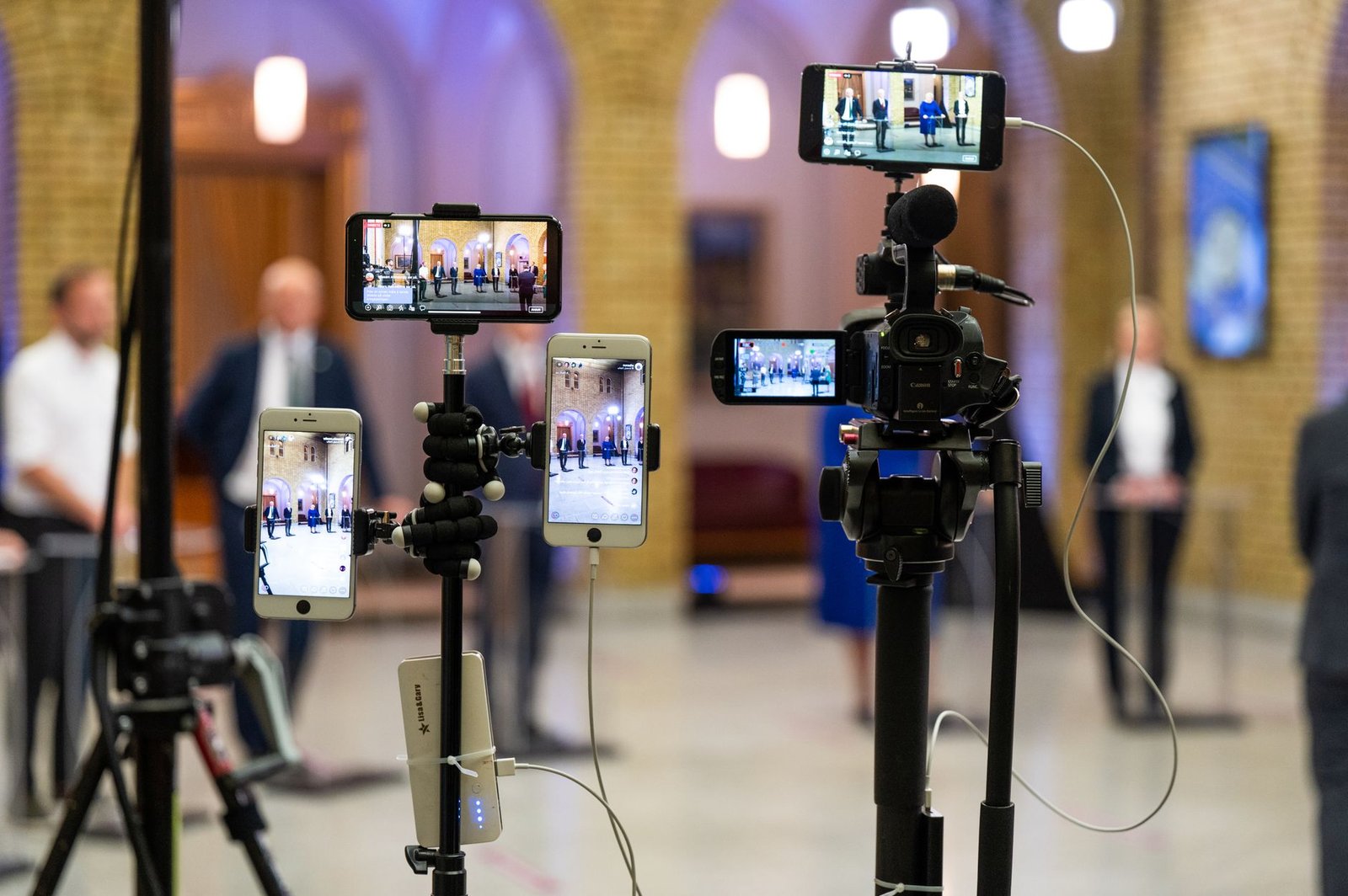
Deploying broadcast-grade audio-visual infrastructure at the European Blockchain Convention requires balancing massive spatial footprint with rapid editorial execution across 6,000 attendees and 300 keynote speakers in Barcelona. Large tech congresses in Catalonia demand disciplined planning around venue networking, multi-camera switching, on-site live editing, and secure asset ingest. Event organizers and corporate sponsors cannot afford dropped signals during keynote announcements or 48-hour delays on PR assets. This operational guide details hardware selections, stage switching, low-latency live streaming architectures, and rapid content turnaround frameworks based on field deployments across 200+ international tech conferences. Getting high-impact visual coverage from Fira Barcelona requires treating your media crew as a technical broadcast unit rather than a freelance filming crew.
Multi-Stage AV Infrastructure at Fira Barcelona
Fira Barcelona requires dedicated Dante audio networking and hardwired SDI runs to mitigate heavy 2.4GHz and 5GHz radio frequency congestion generated by thousands of connected mobile devices. Over three simultaneous stages, our engineering layout routes 12G-SDI optical lines straight into Blackmagic ATEM Constellation 8K switchers to maintain 10-bit 4:2:2 uncompressed signals without transmission delay. Wireless HDMI setups fail inside concrete exhibition halls; therefore, wireless video transmission is strictly isolated to Teradek Bolt 4K systems on zero-delay DFS channels for roving steadicam operators capturing crowd reactions. We isolate audio feeds at the front-of-house sound consoles using transformer-isolated splitters, pulling clean auxiliary board mixes alongside secondary ambient boom microphones for authentic crowd sound. Incorporating techniques from modern immersive AV production, our technical teams calibrate stage lighting to a uniform 5600K color temperature, counteracting ambient LED wall bounce to maintain balanced skin tones for real-time broadcast and 4K recording.
Low-Latency Live Streaming Protocols for Web3 Keynotes
Direct hardware encoding using primary and secondary Haivision Makito X4 units ensures 99.999% stream uptime across YouTube, LinkedIn Live, and proprietary token-gated portals with sub-second glass-to-glass latency. Redundant outbound bandwidth must be provisioned at 50 Mbps minimum per stream, combining a dedicated venue VLAN with failover Teradek bonded cellular modems running dual local SIMs. Software-based encoding on commercial laptops introduces thermal throttling and dropped frames during continuous 9-hour convention days, making standalone FPGA hardware encoders mandatory. Ingest pipelines push SRT (Secure Reliable Transport) feeds with 128-bit AES encryption to cloud distribution points, actively protecting proprietary sponsor presentations and unannounced product roadmaps. Reporting by Blockworks highlights that instantaneous multi-platform distribution drives digital summit engagement, making uninterrupted transmission of tier-one institutional keynotes the primary metric of production success for brand visibility and sponsor satisfaction.
Rapid Turnaround Content Delivery: The 4-Hour Sizzle Reel
Delivering social media highlight reels within 4 to 6 hours requires a dedicated on-site DIT and senior editor operating on local 10GbE network attached storage (NAS). Camera operators swap out high-speed CFexpress Type B cards every 90 minutes, allowing the ingest technician to log, tag, and transcode B-roll clips into ProRes 422 proxy timelines continuously. Vertical 9:16 reels capturing breaking announcements, panel soundbites, and VIP booth activations are edited, graded, and captioned on-site for immediate deployment across X, Telegram, and LinkedIn while audience engagement peaks. The master 4K conference sizzle reel is locked before the evening closing party ends, allowing marketing leadership to distribute recap assets to international media outlets overnight. Full stage keynote recordings undergo automated audio cleanup, mastering, and chapter metadata insertion, with final high-resolution renders uploaded to sponsor portals within 24 to 72 hours post-event.
Data Security and Ingest Protocols: The 3-2-1 Media Architecture
Alesia RSVP enforces a strict 3-2-1 data redundancy protocol across every live production to eliminate data loss risks during multi-stage enterprise conventions. Every recorded clip is stored across three distinct storage volumes: the original high-speed camera card, an on-site NVMe RAID shuttle storage pool, and an encrypted off-site cloud repository. The ingest station uses checksum verification software like Silverstack Lab to validate byte-for-byte fidelity against source media before any camera card is cleared for redeployment on the show floor. In our work across 30+ countries, this rigorous archiving process guarantees that enterprise clients, institutional sponsors, and protocol foundations receive error-free master archives without corrupt audio tracks or dropped camera angles. Physical drives travel off-site inside waterproof, shockproof cases under the custody of the technical director until final cloud parity is confirmed.
Budget Benchmarks and Crew Allocation for Web3 Summits
Full-scale broadcast production for a three-day summit with 300 speakers typically commands an operational budget ranging from €22,000 to €58,000 depending on stage volume and turnaround speed. A standard 3-stage footprint requires an eight-person technical deployment: three studio camera operators, two roving gimbal cinematographers, one dedicated audio engineer, one lead technical director, and an on-site rapid-turnaround post-production editor. Sourcing mixed freelance teams without unified command structures regularly leads to misaligned color profiles, incompatible audio sample rates, and delayed delivery schedules that diminish the marketing impact of the investment. Contracting an integrated agency guarantees standardized hardware across every stage, continuous quality control, and pre-negotiated local equipment logistics within the Barcelona metropolitan area, eliminating surprise cross-border shipping delays and customs tariffs.
See our Web3 event coverage at alesiarsvp.com/ethcc
Frequently Asked Questions
What is the recommended internet bandwidth for live streaming at EBC Barcelona?
A dedicated, synchronous 50 Mbps hardline connection per live stage stream is the baseline requirement. Never rely on shared venue Wi-Fi or general attendee Ethernet drops, which suffer from severe bandwidth throttling during peak conference hours. We deploy bonded cellular backup systems using Teradek hardware equipped with local Spanish SIM cards (Movistar and Vodafone) configured for instantaneous automated failover if the primary venue fiber drops.
How quickly can high-impact social clips be delivered during the convention?
Within 4 to 6 hours from the moment stage sessions wrap, thanks to our on-site post-production workflows. Camera cards are cycled every 90 minutes into an on-site DIT station where an editor trims vertical clips, inserts dynamic captions, balances audio, and delivers ready-to-publish assets directly to your social team. Comprehensive highlight reels and daily aftermovies are fully completed and delivered the same evening before convention floor access closes.
What audio setup is required to capture clear panel discussions across multiple stages?
Digital wireless microphone arrays running Shure Axient Digital systems with directional cardioid capsules isolate speakers and eliminate hall reverberation. We route microphone signals through stage distribution boxes directly into digital sound desks via Dante IP networks, recording uncompressed multitrack audio locally while feeding balanced line-level feeds into hardware video switchers. Redundant ambient microphones capture real-time audience reactions and applause without distorting panelist speech intelligibility.
Why should event organizers choose an integrated production crew over separate local freelancers?
Integrated crews operate with unified technical run sheets, standardized camera color sciences, and identical hardware codecs across all convention stages. Hiring uncoordinated freelancers often produces mismatched footage, chaotic communications between audio and video desks, and delayed delivery windows. A unified technical agency provides end-to-end accountability, managing equipment logistics, data protection protocols, live switching, and rapid delivery under a single experienced production lead.