
ETHMilan 2026: Web3 Video Production & AV Guide
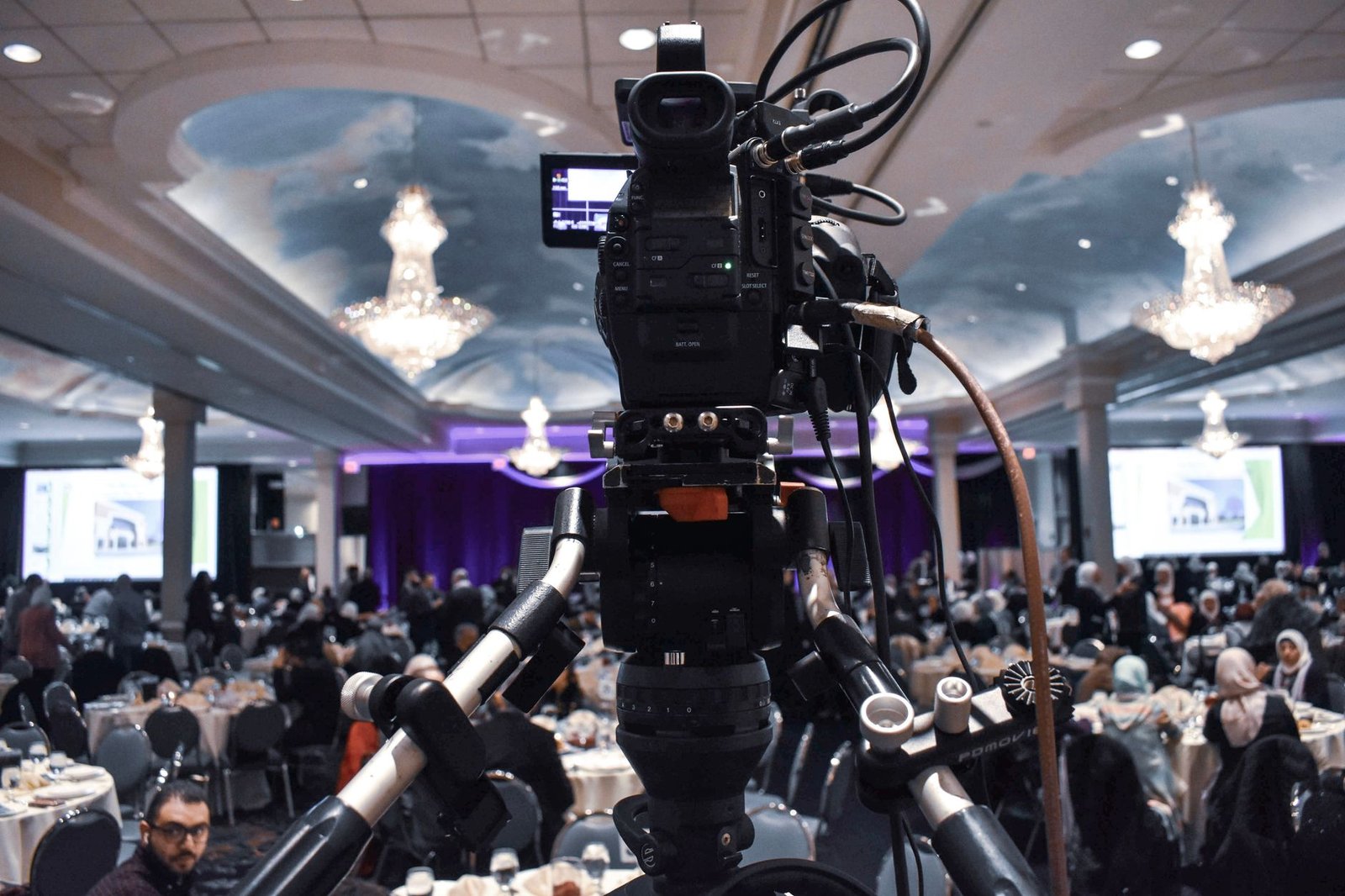
Executing broadcast-grade visual coverage at ETHMilan 2026 requires rigorous technical planning tailored to Italy's premier Ethereum and Web3 conference. Drawing from over 200 events produced across 30 countries and 22 operational cities, Alesia RSVP delivers battle-tested production frameworks for tier-one Web3 brands like OKX, Taiko, and Fabric Ventures. High-profile decentralized gatherings demand zero-latency live streams, immediate short-form vertical assets, and pristine multi-camera recordings to maximize sponsor visibility and community retention. This technical playbook details the equipment specifications, network failovers, venue logistics, and post-production pipelines necessary to transform your Milan activation into an enduring digital asset library.
Milan Venue Logistics and Industrial Acoustic Staging
Milanese event venues—ranging from converted industrial spaces like Superstudio Più to modern conference hubs—require specialized acoustic treatment and custom lighting grids to handle €15,000 to €45,000 AV installations. High ceilings and reflective concrete surfaces in historic spaces frequently create reverberation times exceeding 1.8 seconds, degrading technical keynotes. Our technical teams deploy directional D&B audiotechnik line-array speakers combined with acoustic drapes to drive echo down to under 0.6 seconds. Custom truss rigs equipped with high-CRI LED profile spots (minimum 96 CRI) eliminate harsh shadows on panel stages without overheating speakers. Securing load-in permits in Milan's restricted traffic zones (ZTL) requires a 14-day lead time with local municipal authorities, a protocol Alesia RSVP manages directly to prevent equipment arrival delays.
Dedicated Network Architecture and Zero-Fail Live Streaming
Direct hardline internet connections with hardware-level redundancy represent the baseline for multi-stage Web3 broadcasting. We require a dedicated 100 Mbps symmetrical fiber line per stage, fully isolated from attendee Wi-Fi networks to prevent bandwidth throttling during peak attendance. Our streaming broadcast racks integrate primary Blackmagic hardware encoders with secondary Teradek bonded cellular units running 4 synchronized 5G SIM cards across local Italian carriers (TIM and Vodafone). This dual-redundant topology activates instantaneous failover within 200 milliseconds if venue connectivity drops. Review our complete platform execution for ETHMilan 2026 to understand how multi-track developer sessions and developer keynotes are ingested, mixed, and distributed globally to YouTube, X, and customized RTMP endpoints without frame drops.
Fast-Turnaround Social Pipelines and On-Site Video Editing
Deploying an on-site post-production suite delivers high-impact sizzle reels within 4 to 6 hours of stage completion. Modern conference engagement metrics depend on rapid social distribution while community enthusiasm is peaking across global time zones. A dedicated on-site video editor ingests raw 4K 10-bit footage continuously via 10GbE network attached storage. Editors format synchronized keynote soundbites into 9:16 vertical reels featuring dynamic subtitles, brand watermarks, and b-roll inserts within 90 minutes of talk completion. As detailed in our analysis of 2026 AV trends, speed of publication dictates organic reach on decentralized networks. Comprehensive master cuts, color-graded panel archives, and categorized 4K photography collections follow our standard 24 to 72-hour delivery schedule.
Multi-Camera Switching and Developer Presentation Ingestion
Deploying a minimum of three synchronized 4K cameras per stage ensures comprehensive visual coverage of dynamic speaker interactions and audience reactions. We utilize Sony FX6 cinema bodies equipped with 24-70mm and 70-200mm G-Master lenses, capturing simultaneous ISO recordings in ProRes 422 to preserve color grading flexibility. Presentation feeds are ingested via dedicated HDMI/SDI splitters running into Roland or Blackmagic ATEM Constellation switchers at native 1080p60 or 4K resolution, eliminating the illegible code snippets common in standard webcams. According to crypto media reports on CoinDesk, developer engagement depends heavily on code legibility in recorded workshops. Our 3-2-1 backup protocol copies all media across dual on-site solid-state drives and encrypted cloud storage before venue load-out.
AV Budget Allocation and Equipment Checklists for Brand Sponsors
Allocating 18% to 25% of your total sponsorship budget to professional media capture guarantees an asset library that outlives the two-day live event. Sponsoring a side event or satellite lounge at ETHMilan demands dedicated roving camera operators, wireless Sennheiser EW-DX digital lavalier kits, and portable battery-powered Aputure LED lighting kits. Roving crews capture high-energy sponsor interviews, VIP networking, and atmospheric venue b-roll without disrupting ongoing discussions. Contracting a production partner with native European equipment networks eliminates international freight duties and customs delays, lowering operational overhead by up to 30%. Our unified team coordinates audio engineering, multi-camera switching, live photography, and rapid social editing under a single project manager to ensure seamless technical execution.
Frequently Asked Questions
What are the primary AV challenges at Milan venues for ETHMilan 2026?
Industrial architecture across Milan frequently presents severe acoustic reverberation and restrictive power allocations. Untreated concrete surfaces and high ceilings bounce sound waves, making technical audio unintelligible without directional line-array speakers and acoustic baffling. Additionally, historical venues often operate on restricted 32A or 63A three-phase power supplies, requiring precise electrical load calculations for heavy lighting rigs and LED walls. Alesia RSVP conducts advance technical site surveys across Italian venues to map acoustic profiles, verify power drops, and secure municipal load-in permits well before production day.
How fast can organizers and sponsors receive edited media assets?
High-energy sizzle reels and vertical social cuts are delivered on-site within 4 to 6 hours of stage completion. Our mobile editing units capture live footage continuously, enabling rapid rendering of short-form 9:16 videos optimized for X, LinkedIn, and Telegram distribution while audience engagement remains high. Full-length keynote recordings, raw camera ISO files, and color-corrected high-resolution photo galleries are delivered via private cloud portals within 24 to 72 hours following the event finale, backed by strict quality-assurance reviews.
What network infrastructure is mandatory for zero-latency Web3 live streaming?
Dedicated symmetrical fiber bandwidth of at least 50 to 100 Mbps per active stage is required for uninterrupted streaming. Broadcast pipelines must remain physically isolated from public attendee networks to prevent latency spikes during high-traffic keynotes. Alesia RSVP implements hardware encoders combined with Teradek bonded cellular units holding four multi-carrier 5G SIM cards. This architecture creates an automated failover system that maintains continuous 1080p60 broadcast delivery without packet loss even if primary venue internet experiences outages.
Does Alesia RSVP manage local Italian production logistics and permits?
Yes, Alesia RSVP manages end-to-end technical production, equipment logistics, and municipal permitting across Milan and Italy. With local operations across 22 major cities, our bilingual production managers handle restricted traffic zone (ZTL) access permits, venue union regulations, power distribution compliance, and on-site crew coordination. This integrated operational structure eliminates cross-border shipping delays and import tariffs, providing corporate brands with reliable, broadcast-grade event media execution throughout Europe.
See our Web3 event coverage at alesiarsvp.com/ethcc
Frequently Asked Questions
What are the primary AV challenges at Milan venues for ETHMilan 2026?
Industrial architecture across Milan frequently presents severe acoustic reverberation and restrictive power allocations. Untreated concrete surfaces and high ceilings bounce sound waves, making technical audio unintelligible without directional line-array speakers and acoustic baffling. Additionally, historical venues often operate on restricted 32A or 63A three-phase power supplies, requiring precise electrical load calculations for heavy lighting rigs and LED walls. Alesia RSVP conducts advance technical site surveys across Italian venues to map acoustic profiles, verify power drops, and secure municipal load-in permits well before production day.
How fast can organizers and sponsors receive edited media assets?
High-energy sizzle reels and vertical social cuts are delivered on-site within 4 to 6 hours of stage completion. Our mobile editing units capture live footage continuously, enabling rapid rendering of short-form 9:16 videos optimized for X, LinkedIn, and Telegram distribution while audience engagement remains high. Full-length keynote recordings, raw camera ISO files, and color-corrected high-resolution photo galleries are delivered via private cloud portals within 24 to 72 hours following the event finale, backed by strict quality-assurance reviews.
What network infrastructure is mandatory for zero-latency Web3 live streaming?
Dedicated symmetrical fiber bandwidth of at least 50 to 100 Mbps per active stage is required for uninterrupted streaming. Broadcast pipelines must remain physically isolated from public attendee networks to prevent latency spikes during high-traffic keynotes. Alesia RSVP implements hardware encoders combined with Teradek bonded cellular units holding four multi-carrier 5G SIM cards. This architecture creates an automated failover system that maintains continuous 1080p60 broadcast delivery without packet loss even if primary venue internet experiences outages.
Does Alesia RSVP manage local Italian production logistics and permits?
Yes, Alesia RSVP manages end-to-end technical production, equipment logistics, and municipal permitting across Milan and Italy. With local operations across 22 major cities, our bilingual production managers handle restricted traffic zone (ZTL) access permits, venue union regulations, power distribution compliance, and on-site crew coordination. This integrated operational structure eliminates cross-border shipping delays and import tariffs, providing corporate brands with reliable, broadcast-grade event media execution throughout Europe.