
SATIS 2026 Awards: Top Audiovisual Innovations
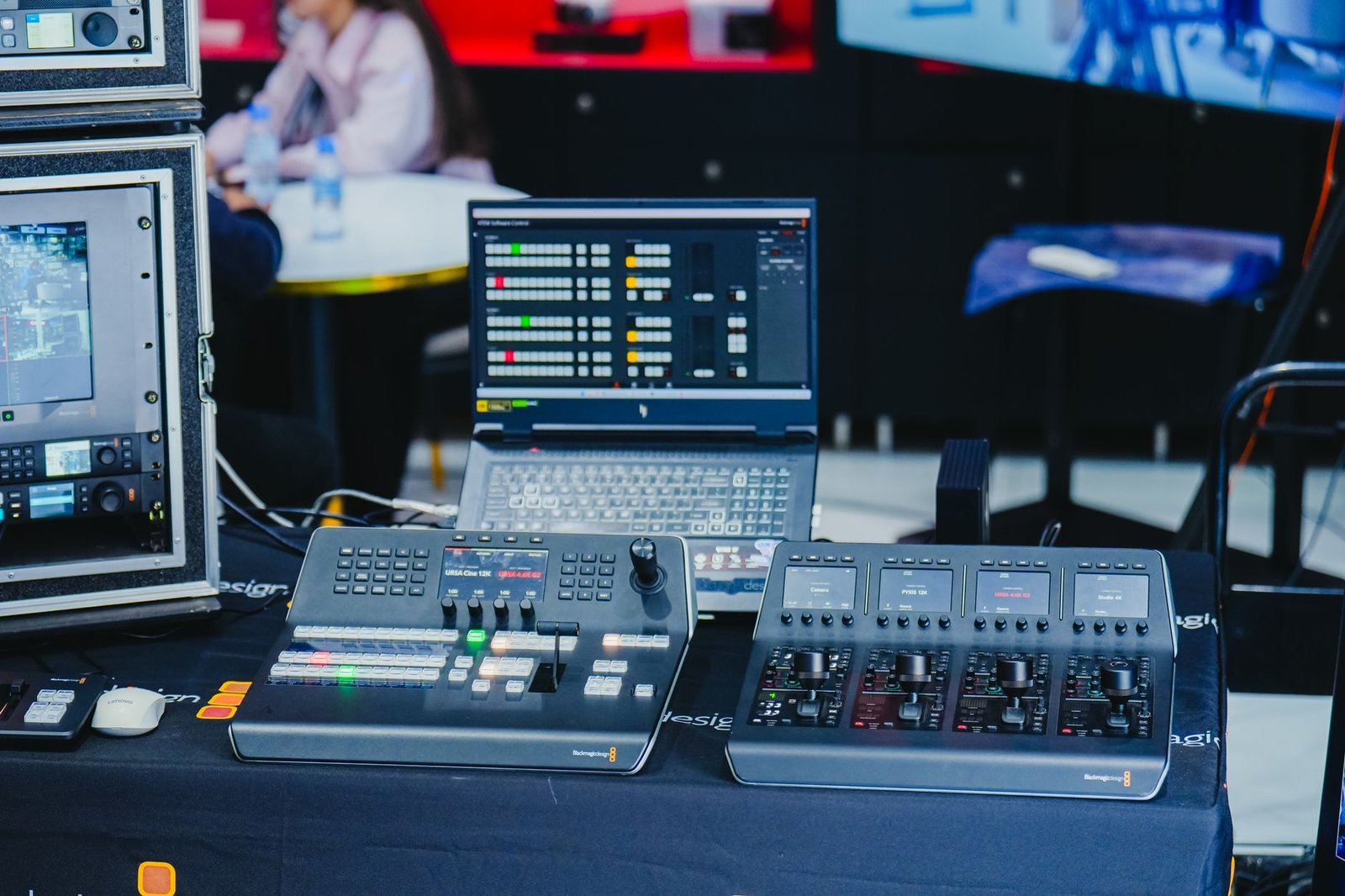
The SATIS Awards recognize filming, post-production, and broadcast technologies each autumn at Les Docks de Paris for media and event professionals. During the 2026 edition, the official selection highlighted concrete technical equipment that directly transforms how production crews operate on the ground. Jury selections bypass marketing hype to solve immediate operational constraints found across international corporate summits: rapid network routing, zero-latency uncompressed signal distribution, and compressed post-production turnaround schedules. For event directors and B2B marketing leaders, these awards validate industrial benchmarks required to capture and stream multi-stage enterprise gatherings across global venues without technical failure, signal dropouts, or unpredictable latency spikes.
NDI and SMPTE 2110 IP Architectures Cut Logistic Footprint by 35%
Switching from conventional coaxial cabling to standardized fiber-optic and IP signal routing directly reduces production footprint by 35%. During our enterprise deployments across Paris, including tier-one summits coordinated at our Paris production hub, replacing heavy copper SDI lines with gigabit network infrastructure eliminates hundreds of kilograms of flight cases. A single 10 Gbps managed network switch handles up to 8 uncompressed 4K video feeds with end-to-end latency below 5 milliseconds, verified by European Broadcasting Union (EBU) benchmark testing. This technical consolidation enables our engineering teams to deploy a complete multi-stage master control room in under 3 hours, replacing operations that previously required an entire day of cabling runs. Furthermore, these award-winning hardware modules deliver sub-microsecond PTP (Precision Time Protocol) clock synchronization, eliminating drift over 48 hours of uninterrupted live streaming across disparate breakout stages.
Hardware Encoders and Teradek Bonded Cellular Ensure 99.9% Uptime
Securing enterprise live transmissions requires dedicated hardware encoders and cellular aggregation to achieve 99.9% broadcast availability. Deploying Teradek bonded cellular systems combines up to 6 active 5G SIM cards alongside secure local Ethernet uplinks to prevent connectivity dropouts. According to technical field reports published by Event Marketer, 42% of broadcast interruptions during hybrid corporate gatherings stem from unmonitored or unbonded public uplink failures. The standalone encoder appliances recognized at SATIS run native SRT (Secure Reliable Transport) protocols capable of withstanding 20% packet loss while maintaining a steady 15 Mbps video throughput across saturated network environments. This automated network redundancy protects multi-destination feeds routed to YouTube, LinkedIn Live, and proprietary enterprise platforms without relying on expensive dedicated fiber drops often billed at exorbitant rates by convention venues.
Automated Ingest Stations and On-Site Workflows Reduce Dailies to 15 Minutes
On-site ingest stations equipped with hardware accelerators cut media logging and dailies turnaround down to 15 minutes post-session. These localized edge servers ingest 4 concurrent 4K 60fps camera streams while simultaneously rendering editing proxies and generating timecode-indexed text transcripts before speakers leave the stage. By deploying these award-winning units at corporate gatherings, our teams deliver polished sizzle reels within 4 to 6 hours on-site, outperforming conventional post-production timelines of 24 to 48 hours. We analyze these operational media pipelines thoroughly within our review of 2026 AV trends in immersive event production. Editors immediately cut highlight assets using lightweight proxies while master Apple ProRes 422 HQ archives transfer across a 40 GbE local network to 64 TB NVMe RAID arrays strictly following our 3-2-1 data preservation protocol.
Full-Frame Robotic PTZ Cameras Allow One Operator to Control 4 Stages
Robotic pan-tilt-zoom cameras equipped with full-frame CMOS sensors allow a single broadcast operator to control up to 4 live stages simultaneously. The hardware awarded at SATIS 2026 delivers a native sensitivity of ISO 12,800, enabling artifact-free image capture in low-light auditorium environments without grain or digital noise. Utilizing IP control consoles with millimetric preset positioning recall, one technician can manage multi-angle coverage across simultaneous auditoriums. For an enterprise summit split across 3 parallel keynote tracks, integrating these robotic setups reduces on-site camera crew requirements by 25% while maintaining uniform color science and smooth camera transitions across every stream. In addition, 30x optical zoom lenses with internal optical image stabilization neutralize mechanical stage floor vibrations, delivering fluid cinematic movements that manual operators cannot sustain consistently over an 8-hour plenary session.
Next-Gen Micro-LED Processors Lower Stage Power Consumption by 40%
Advanced display controllers and modular micro-LED panels slash stage video wall power consumption by 40% while enhancing dynamic contrast. These specialized hardware processors calculate luminance curves on a per-pixel basis, preserving vivid brand imagery on large stages without generating excessive heat under auditorium lighting fixtures. At high-visibility executive conferences such as Proof of Talk 2026, curbing electrical demand avoids oversizing temporary mobile generator units, saving corporate organizers between €5,000 and €12,000 in supplementary power infrastructure fees per auditorium. In addition, these displays feature an ultra-fine 0.9 mm pixel pitch that completely eliminates visible moiré distortion patterns on broadcast cameras positioned less than 3 meters from the backdrop, guaranteeing flawless visual depth for tight speaker close-ups and wide tracking shots alike.
Frequently Asked Questions
Which equipment categories are evaluated at the SATIS Awards?
Hardware and software across filming production, post-production, network distribution, display technologies, and cloud workflow services form the official SATIS evaluation categories each year. A jury panel of broadcast engineers and event directors reviews entries against three strict operational criteria: tangible on-site productivity gains, live stream reliability, and native interoperability with current enterprise broadcast protocols. Solutions winning awards demonstrate measurable efficiency improvements on stage floors and control rooms rather than unverified theoretical feature sets.
Why does adopting video-over-IP change the economics of conference capture?
Video-over-IP infrastructure eliminates costly multi-core coaxial cabling by transmitting uncompressed multi-channel signals over standard Cat6A Ethernet or optical fiber lines. Transitioning to NDI and SMPTE 2110 protocols cuts physical setup time by 50% and decreases control room freight weight by 35%. Consequently, event organizers achieve substantial savings on technical transport, venue rigging, and local staffing overhead required to manage multi-stage conference productions across international convention centers.
What turnaround timeline should enterprise organizers expect for an event sizzle reel?
On-site delivery of a fully edited, color-graded, and branded sizzle reel requires between 4 and 6 hours when utilizing dedicated hardware ingest servers. Automated transcription, proxy workflows, and timecode logging allow editors to cut keynote highlights directly on-site while sessions are underway. Meanwhile, full raw multi-cam master archives, unedited keynote replays, and vertical social media cutdowns follow a guaranteed delivery timeline of 24 to 72 hours under standard post-production service agreements.
Why choose a dedicated external hardware encoder over computer software?
Hardware encoders utilize dedicated ASIC or FPGA chipsets built specifically for real-time video compression without competing for computing resources with an operating system. This dedicated architecture eliminates computer operating system crashes, maintains audio-video synchronization to the exact millisecond, and guarantees live stream uptime rates exceeding 99.9% throughout full conference schedules. Furthermore, hardware encoders support multi-network cellular bonding directly, providing resilient fallback connectivity during sudden venue local network drops.
Explore our case studies at alesiarsvp.com/work
Frequently Asked Questions
Which equipment categories are evaluated at the SATIS Awards?
Hardware and software across filming production, post-production, network distribution, display technologies, and cloud workflow services form the official SATIS evaluation categories each year. A jury panel of broadcast engineers and event directors reviews entries against three strict operational criteria: tangible on-site productivity gains, live stream reliability, and native interoperability with current enterprise broadcast protocols. Solutions winning awards demonstrate measurable efficiency improvements on stage floors and control rooms rather than unverified theoretical feature sets.
Why does adopting video-over-IP change the economics of conference capture?
Video-over-IP infrastructure eliminates costly multi-core coaxial cabling by transmitting uncompressed multi-channel signals over standard Cat6A Ethernet or optical fiber lines. Transitioning to NDI and SMPTE 2110 protocols cuts physical setup time by 50% and decreases control room freight weight by 35%. Consequently, event organizers achieve substantial savings on technical transport, venue rigging, and local staffing overhead required to manage multi-stage conference productions across international convention centers.
What turnaround timeline should enterprise organizers expect for an event sizzle reel?
On-site delivery of a fully edited, color-graded, and branded sizzle reel requires between 4 and 6 hours when utilizing dedicated hardware ingest servers. Automated transcription, proxy workflows, and timecode logging allow editors to cut keynote highlights directly on-site while sessions are underway. Meanwhile, full raw multi-cam master archives, unedited keynote replays, and vertical social media cutdowns follow a guaranteed delivery timeline of 24 to 72 hours under standard post-production service agreements.
Why choose a dedicated external hardware encoder over computer software?
Hardware encoders utilize dedicated ASIC or FPGA chipsets built specifically for real-time video compression without competing for computing resources with an operating system. This dedicated architecture eliminates computer operating system crashes, maintains audio-video synchronization to the exact millisecond, and guarantees live stream uptime rates exceeding 99.9% throughout full conference schedules. Furthermore, hardware encoders support multi-network cellular bonding directly, providing resilient fallback connectivity during sudden venue local network drops.