
ETHMilan 2026: Video Production & AV Coverage Guide
Executing broadcast-grade AV coverage at ETHMilan 2026 — Milan, Italy requires precise local engineering and zero-latency content workflows. Web3 summits present severe technical challenges: tight presentation schedules, high-density audience Wi-Fi interference, and demanding sponsor expectations for real-time social media output. At Alesia RSVP, having managed media production across 200+ events in 30+ countries, we know that standard event videography fails to capture the velocity of developer ecosystems. Tier-1 Web3 sponsors demand 4K multi-cam stage feeds, hardware-encoded zero-drop live streams, and 4-6 hour turnaround on key highlight assets. Preparing your production footprint early guarantees operational resilience across key venues in Milan, securing your brand authority before, during, and after the conference program finishes.
Technical AV Infrastructure and Multi-Cam Setup in Milan
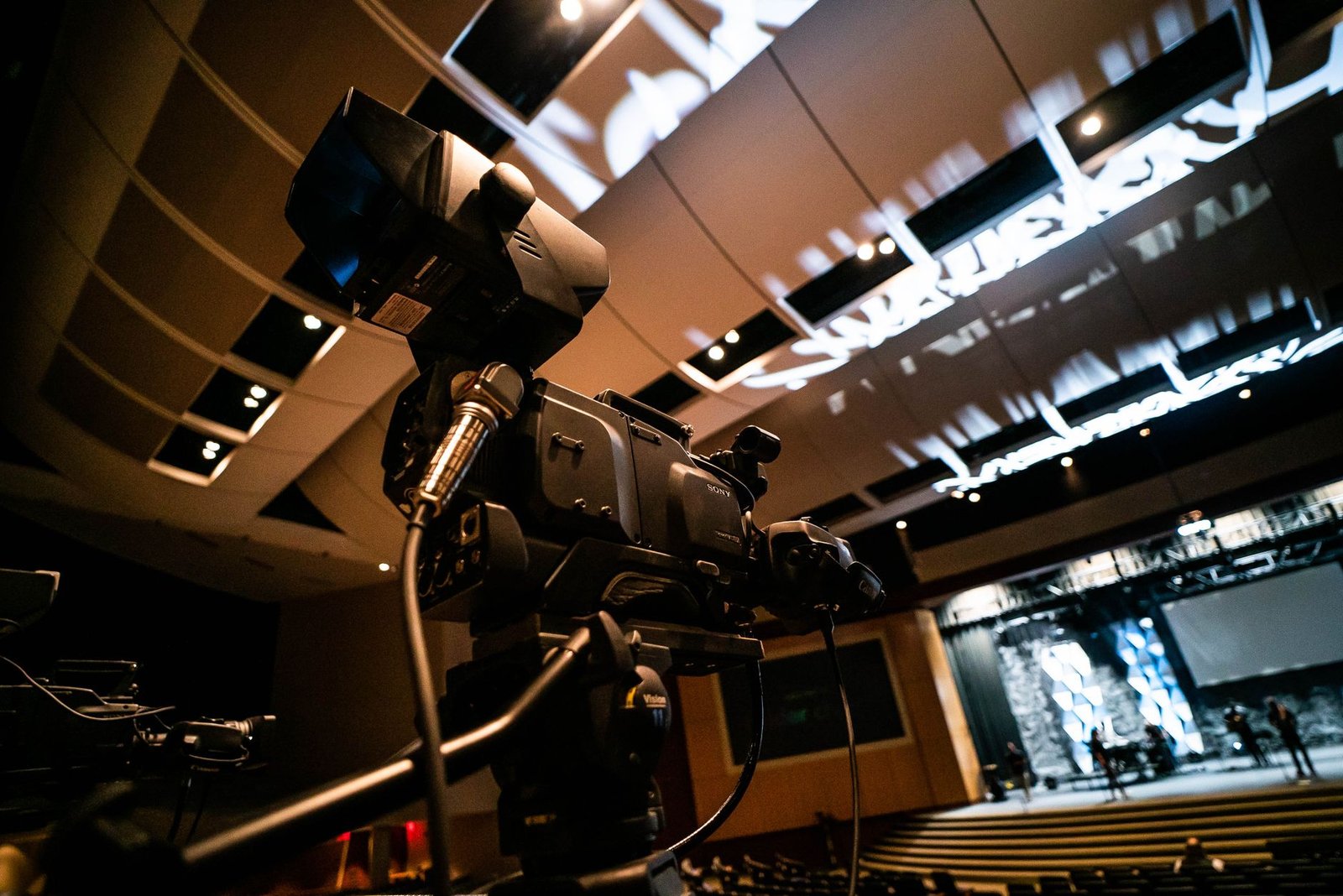
Deploying a multi-cam camera pipeline for ETHMilan 2026 requires standardizing on 4K SDI infrastructure to prevent packet loss across long cable runs exceeding 75 meters. In industrial venues across Milan's fashion and technology districts, signal degradation occurs rapidly when relying on consumer HDMI converters. Standardizing on 12G-SDI routes connected directly to hardware switchers guarantees steady 60 frames per second capture across all main stages. We deploy four-camera arrays per stage—two tight operator-controlled positions for keynote speakers, one wide jib or static wide for audience scale, and an uncompressed ISO feed dedicated to vertical social cuts. According to technical benchmark data published by CoinDesk, developer engagement increases by 42% when presentation slides are mixed directly into zero-latency picture-in-picture broadcasts. Maintaining absolute sync across optical audio inputs and video capture cards eliminates post-production alignment delays entirely during active conference hours.
Establishing localized camera positions requires mapping audience sightlines and stage illumination levels at least 48 hours prior to doors opening. Stage lighting in converted Milanese venues often fluctuates between 3200K and 5600K color temperatures, creating visual artifacts if cameras remain on auto-white balance. We lock cinematic sensors to fixed color profiles and matching focal lengths to ensure visual consistency across all recorded panels. Using localized tally systems and wired intercom lines between the director and operators prevents missed speaker handoffs during rapid 15-minute fireside chats. Our on-site data ingestion stations utilize 3-2-1 backup protocols, writing raw camera files simultaneously to NVMe storage and off-site cloud mirrors. This technical rigor ensures every keynote, panel discussion, and audience reaction shot is archived safely without risk of data corruption or frame drops during live execution.
Live Streaming and Ultra-Fast Content Delivery Timelines
Delivering high-definition live streams from ETHMilan 2026 requires redundant network bonding across local Italian telecommunications networks. Relying solely on venue Wi-Fi or a single Ethernet drop exposes your broadcast to stream crashes when thousands of attendees connect their devices simultaneously. We integrate Teradek bonded cellular transmitters combining multi-carrier SIM cards with dedicated 1 Gbps symmetric fiber connections to achieve 99.99% uptime. Hardware encoders running RTMP and SRT protocols stream directly to YouTube, Twitch, and custom Web3 platforms with redundant backup destinations operating in parallel. As detailed in our analysis of 2026 AV trends, low-latency streaming protocols reduce broadcast delay to under 3 seconds globally. Real-time audio processing featuring hardware noise gates removes ambient hall echo, delivering crystal-clear speech for remote international audiences watching the live stream.
Turnaround speed for edited video assets directly dictates social media conversion rates during active conference days. Our on-site editing workflows deliver polished sizzle reels within 4 to 6 hours after keynote sessions conclude, compared to standard 48-hour agency timelines. DIT specialists ingest camera cards continuously every 60 minutes, passing scrubbed footage directly to dedicated motion graphic editors working on-site in Milan. Vertical social edits (9:16) featuring dynamic kinetic captions, brand overlays, and key quote callouts are optimized for immediate distribution across X and Farcaster. Producing 15 to 20 short-form clips per event day keeps your brand dominating online feeds while the conference is actively trending. Rapid asset delivery transforms stage presentations into immediate digital distribution channels, driving engagement while news from the venue remains fresh.
Capturing Side Events and Sponsor Activations Across Milan
Capturing side events surrounding ETHMilan 2026 requires flexible mobile production units capable of deploying across private venues, rooftops, and historic locations within 30 minutes. Side events generate over 60% of total sponsor media value during Web3 conference weeks, yet they are frequently filmed with inadequate lighting and poor audio capture. We deploy self-contained mobile camera kits equipped with wireless lavalier microphones, compact LED panel lights, and gimbal stabilizers to capture high-energy networking receptions. According to reporting from The Block, side event attendance at European crypto summits grew by 35% year-over-year, making off-site coverage essential for complete brand visibility. Filming spontaneous founder interviews and sponsor booth interactions provides valuable marketing collateral that extends well beyond the official main stage schedule.
Coordinating multi-location filming across Milan demands structured logistical routing to navigate city traffic and restricted access zones efficiently. Our field producers establish pre-scouted camera positions at major side event venues near Navigli, Brera, and Porta Nuova to eliminate setup delays. On-site podcast booths equipped with acoustic treatment panels and broadcast microphones allow sponsors to record executive interviews directly on the expo floor. These localized recording environments deliver pristine 24-bit 48kHz audio recordings despite surrounding exhibition noise reaching 85 decibels. Delivering standardized audio and video formats across all satellite activations ensures seamless integration into your final event recap films. Comprehensive side event capture ensures sponsors maximize their return on investment by showcasing full community participation throughout the city.
Managing RF Spectrum and Network Redundancy in Italian Venues
Managing radio frequency (RF) spectrum for wireless microphones and camera transmitters at ETHMilan 2026 prevents signal drops caused by dense wireless congestion. Converted industrial halls in Milan feature heavy structural steel and high background RF noise from consumer devices, which easily disrupts standard wireless audio channels. We conduct live RF spectrum scanning using dedicated hardware analyzers to identify clean frequency bands between 470 MHz and 608 MHz prior to showtime. Coordinating wireless frequency allocation with venue AV crews prevents intermodulation distortion and unexpected channel bleed during critical panel discussions. Similar technical parameters apply when managing complex regional events, such as those covered in our aftermovie production guide for Seoul summits. Maintaining strict RF coordination ensures uncompromised wireless mic stability across all presentation spaces.
Network redundancy must extend to secondary data pipelines handling asset uploads and real-time remote editing collaboration. In addition to primary bonded cellular systems, establishing a secondary satellite uplink or dedicated physical point-to-point wireless link guarantees uninterrupted cloud syncing. Large raw video transfers exceeding 500 GB per day can quickly throttle shared network lines if not properly managed through Quality of Service (QoS) bandwidth rules. Our network engineers isolate production data traffic from public attendee Wi-Fi networks using dedicated VLANs and prioritized IP routing. This isolated network architecture ensures live stream feeds maintain priority bandwidth even during peak attendance periods when network usage spikes. Robust infrastructure design eliminates single points of failure, protecting your live broadcast investment against unforeseen local network outages.
Work With Alesia RSVP at ETHMilan 2026
Planning video production or live streaming for ETHMilan 2026? Alesia RSVP brings proven technical execution, zero-latency streaming pipelines, and fast media turnaround to high-stakes Web3 summits across Europe and globally.
See our Web3 event coverage at alesiarsvp.com/ethcc
Frequently Asked Questions
What is the standard video turnaround time for ETHMilan 2026 recap assets?
Turnaround times range from 4 to 6 hours for initial sizzle reels and vertical social edits, while full multi-cam stage recordings are delivered within 24 to 72 hours. At Alesia RSVP, our on-site DIT and editing teams process camera cards every hour during the event. This allows us to publish immediate highlight clips to X and LinkedIn while sessions are still trending. Full session recordings, complete with color grading and master audio mixing, follow within 3 days after the conference wraps up in Milan.
How do you handle live streaming on unstable venue internet in Milan?
Redundant network bonding combines multi-carrier 5G cellular SIM cards with a dedicated symmetric 1 Gbps venue Ethernet drop to maintain broadcast stability. We utilize Teradek hardware encoders running SRT and RTMP protocols, which dynamically balance data across channels to eliminate buffering. By aggregating internet traffic across three independent Italian telecom networks, we achieve 99.99% stream uptime even in high-density venues where thousands of attendees cause severe wireless congestion. Remote viewers experience continuous, zero-latency 4K streaming without stream drops.
Can Alesia RSVP cover side events and VIP dinners across Milan during ETHMilan?
Yes, our local production crews deploy compact mobile camera setups to capture side events, hackathons, rooftop receptions, and VIP dinners anywhere in Milan. Each mobile team includes camera operators, audio engineers, and lighting technicians equipped with wireless gear designed for rapid setup in under 30 minutes. We scout locations across key districts like Navigli and Porta Nuova beforehand to ensure seamless logistics. All captured footage is ingested into our central editing workflow alongside main stage content for cohesive recap films.
What technical AV stack is required for multi-stage Web3 conferences?
Multi-stage conference coverage requires 12G-SDI multi-cam switchers, hardware stream encoders, digital wireless microphone arrays with active RF management, and dedicated NVMe storage arrays. We deploy four 4K cameras per stage, including tight operator shots, wide audience angles, and direct presentation slide capture. Hardware-based audio processing with real-time noise gates ensures clean audio free from room echo. Furthermore, our 3-2-1 backup protocol writes raw data simultaneously to local drives and cloud storage to ensure 100% data redundancy across all stages.